International Projects
Bikini Atol and the Marshall Islands: Remembering the Future
“The most painful state of being is remembering the future,
particularly the one you’ll never have.”
- Søren KierkegaardIn the summer of 2023 I joined an expedition to the Marshall Islands as part of a diverse group of international and young Marshallese artists, writers, and scientists. We boarded a boat from Kwajalein Atol and traveled north over the Pacific to Bikini Atol and other islands of the Republic of the Marshall Islands. The trip was organized by photographer Michael Light, David Buckland founder of the Cape Farewell Foundation (UK), and Marshallese poet and artist Kathy Jetnil-Kijiner.
The trip was designed to give artists a chance to learn about the culture and nuclear history of the RMI and the conjoined threat that climate change posed to this island nation’s existence. The objective was also to encourage the invited artists to make new works about their experiences there. William L (Bill) Fox, co-author of The Half Life of History (Radius Books 2011) was among those on board and from the outset we planned to work together to record our experiences.
Our resulting project was published as Remembering the Future, Nuclear Testing, Rising Seas, and The Marshall Islands in early 2026 by Radius Books. The combination of text and photographs roughly followed our travels for nearly two weeks in August of 2023, and again in late February and early March of 2024 as Bill and I returned to the RMI capital of Majuro for an exhibition and the observance of Nuclear Victims’ Remembrance day.
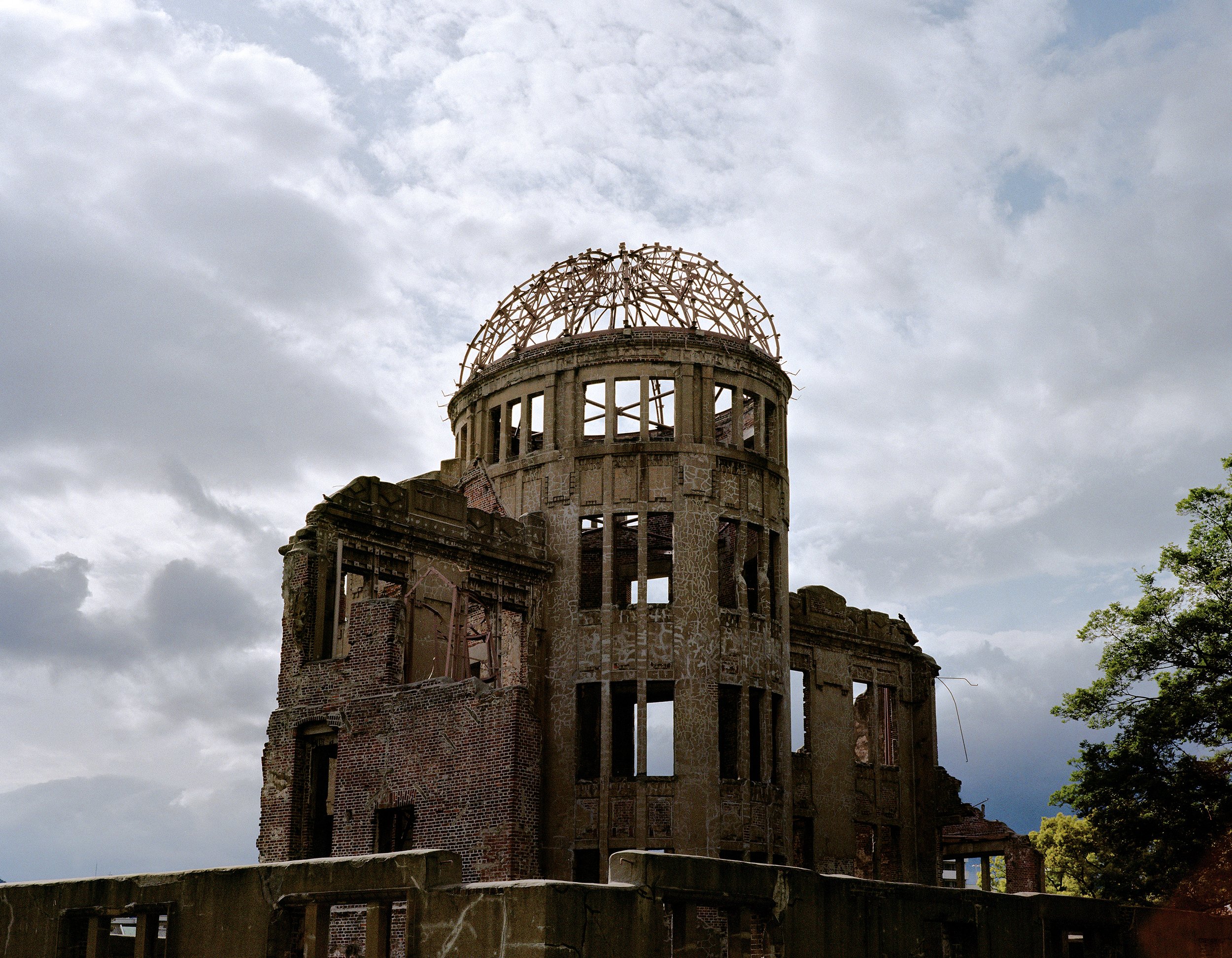
Remembering the Future begins where our work on the Half Life of History ended, with the testing of nuclear bombs on Bikini Atol soon after the end of WWII. Altogether 67 nuclear devices were detonated over the northern Marshall Islands between 1946 and 1958. The costs to the Marshallese people by this history have been staggering and the islands affected by radiation remain uninhabitable today. Rising sea levels spurred on by climate change now threaten the southern islands where the majority of Marshallese people continue to live. We found that the twin existential threats posed by nuclear weapons and climate change are not isolated to the RMI, and as we all face the possibilities of new nuclear weapons testing and even threats of their use, and the global consequences of climate change inactivity insure that we cannot see ourselves as immune from the suffering of the Marshallese.
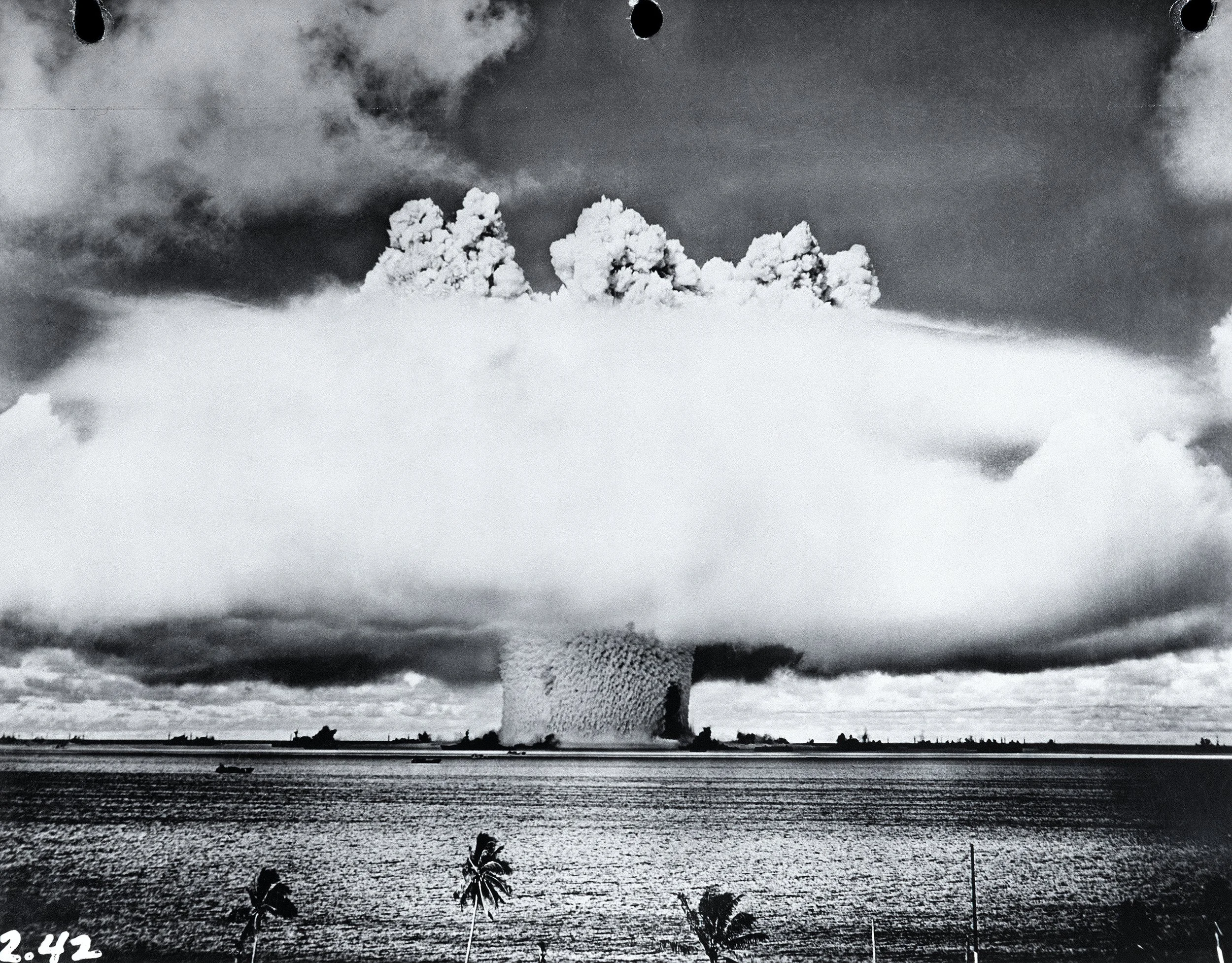
The Baker detonation, Bikini lagoon, July 25,1946 (courtesy Michael Light, 100 Suns, Knopf, 2003)
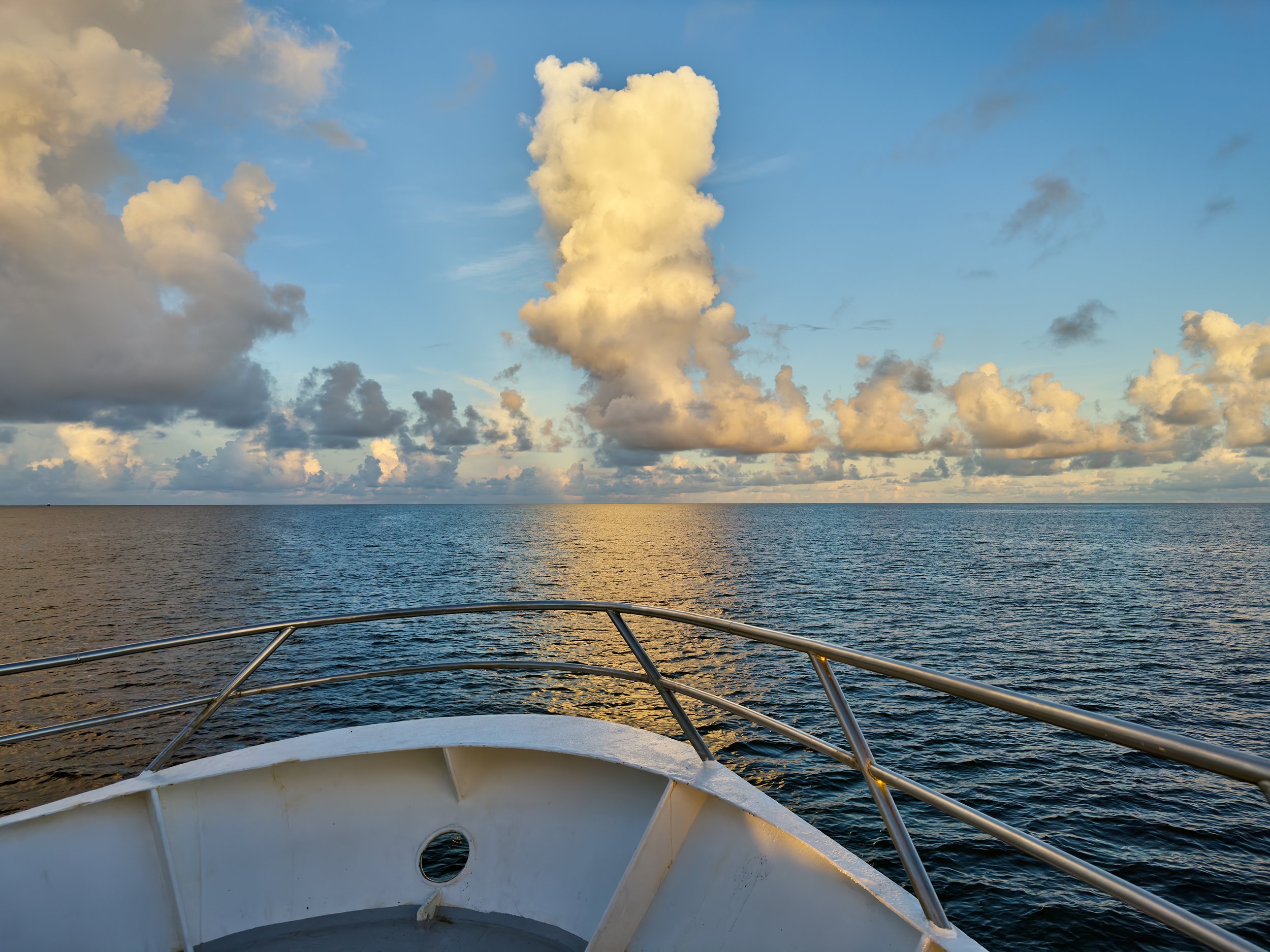
Morning clouds forming over Bikini lagoon.
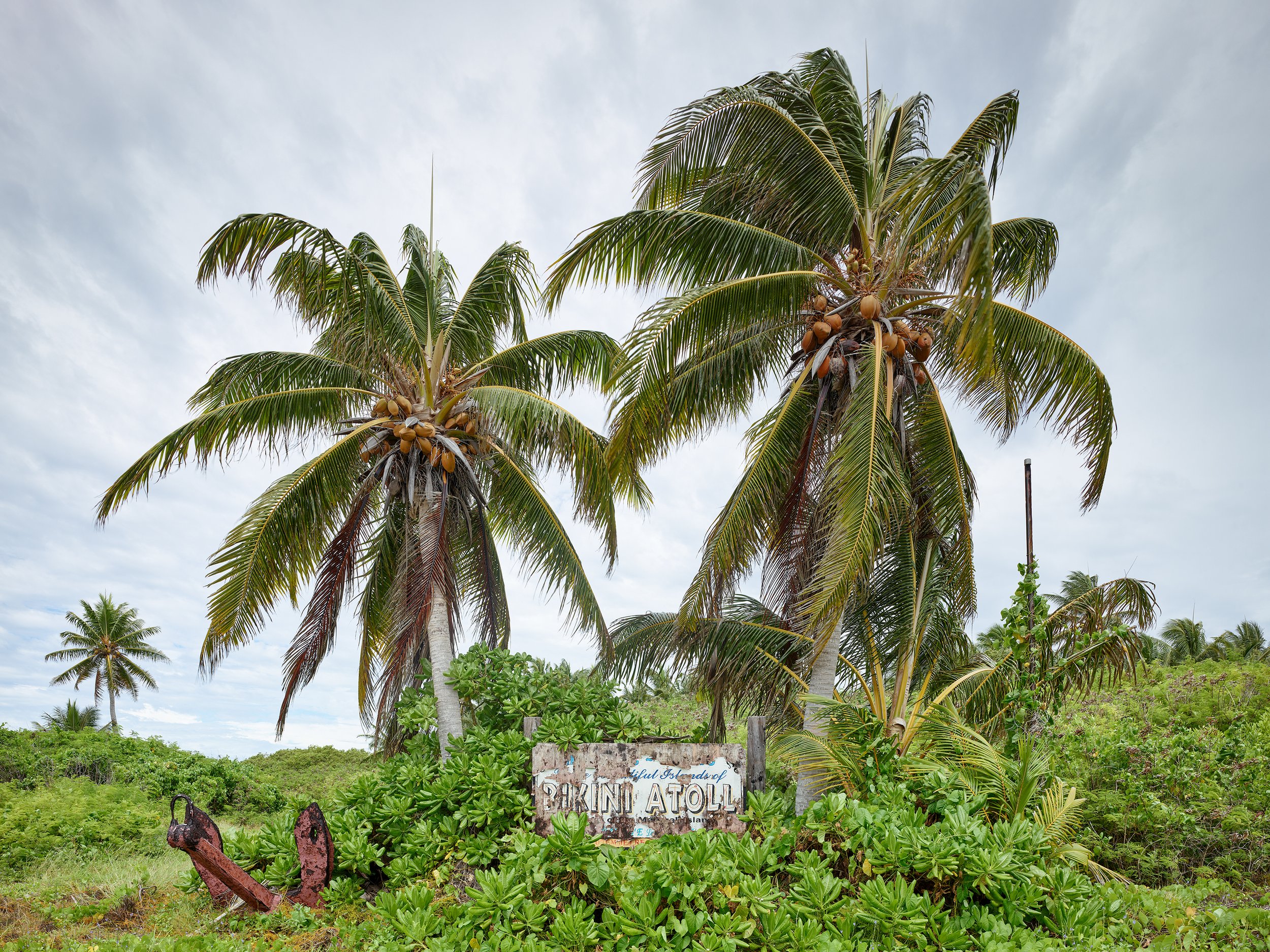
“Welcome to Bikini” sign at the overgrown airstrip on Enue, Bikini Atoll.
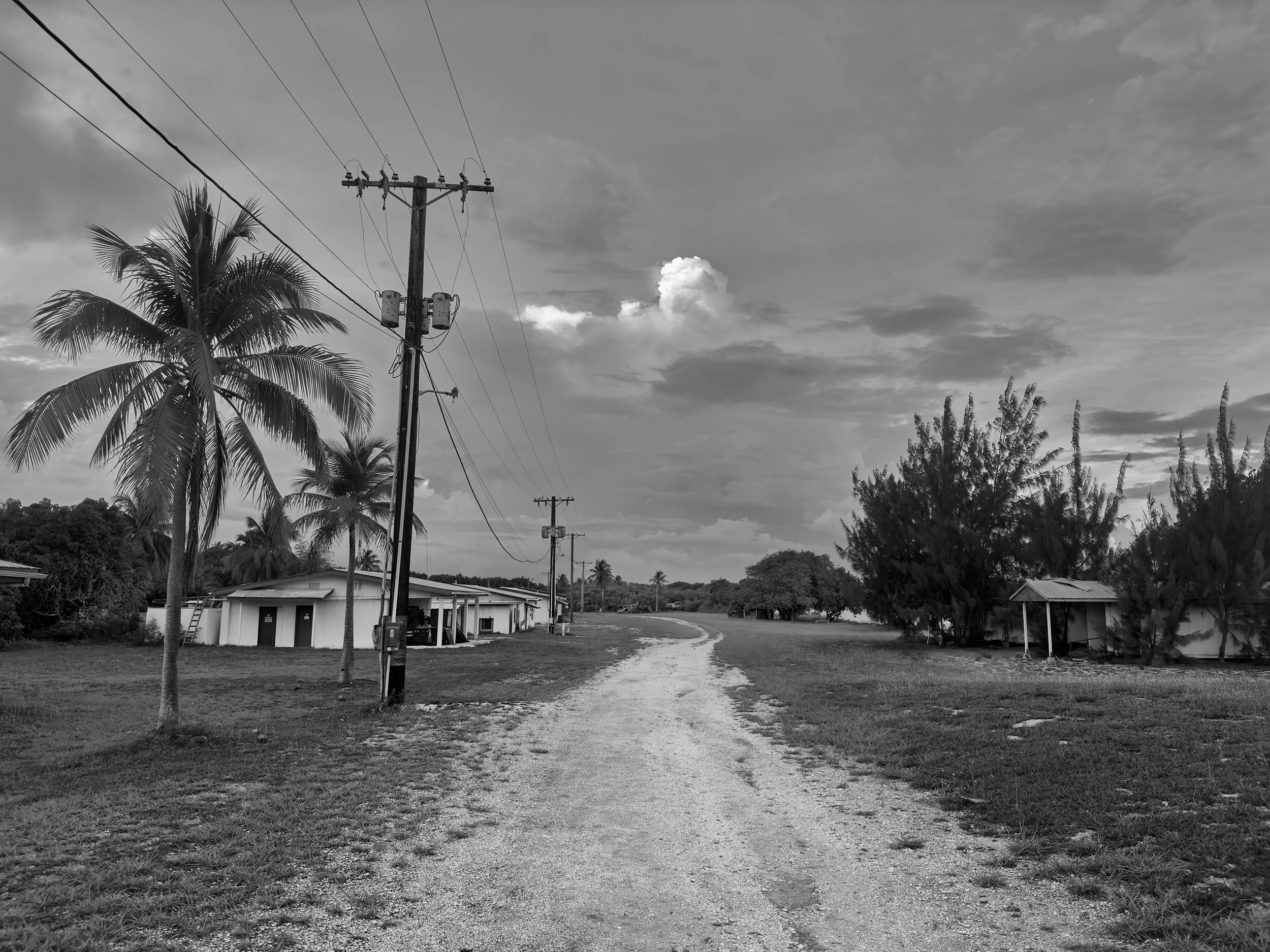
Dirt road leading through the remains of buildings on Bikini.
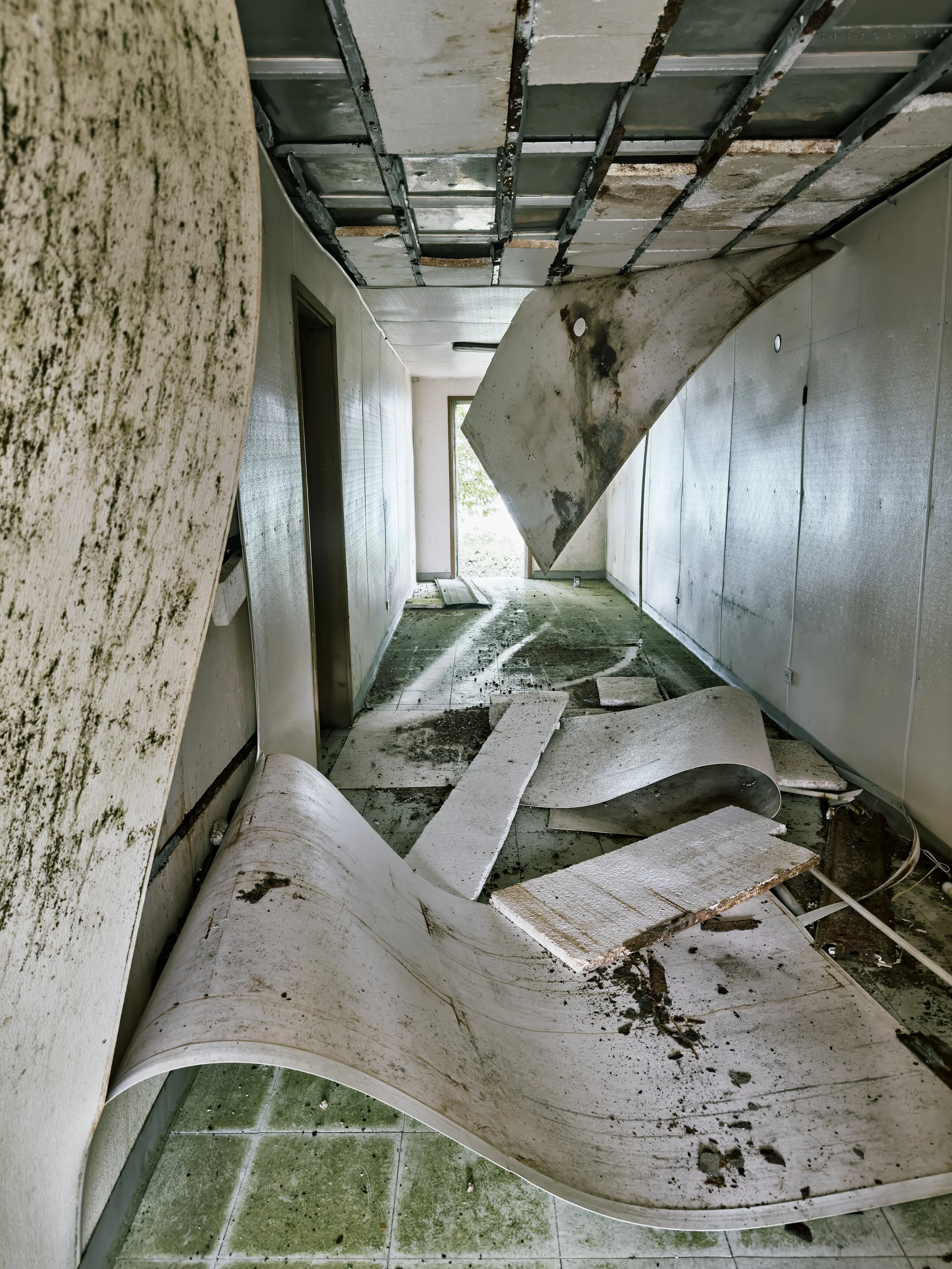
The ceiling and walls falling in at a storage structure on Bikini.
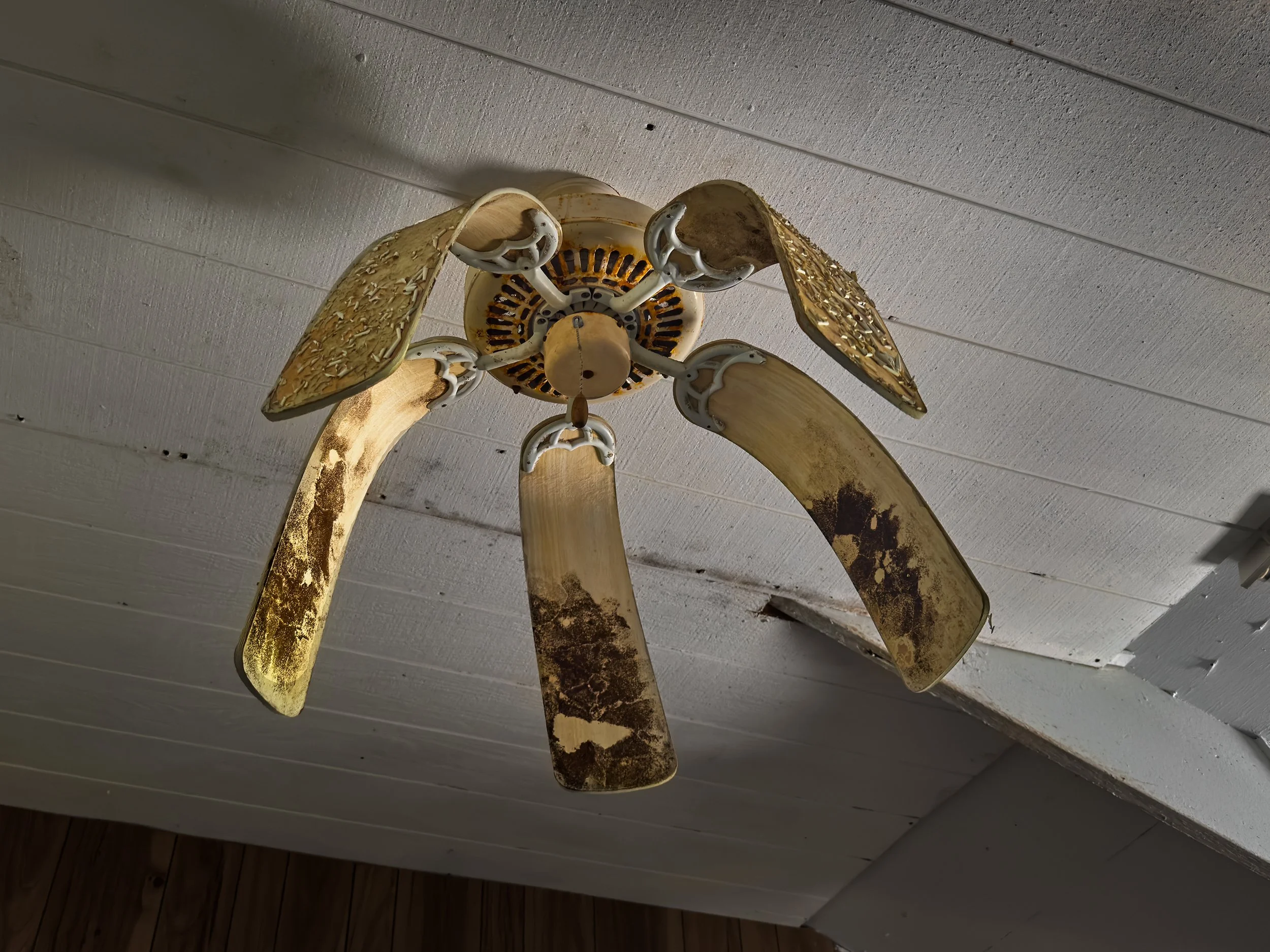
Ceiling fan warped by heat and humidity, dorm room built to house visiting divers, Bikini.
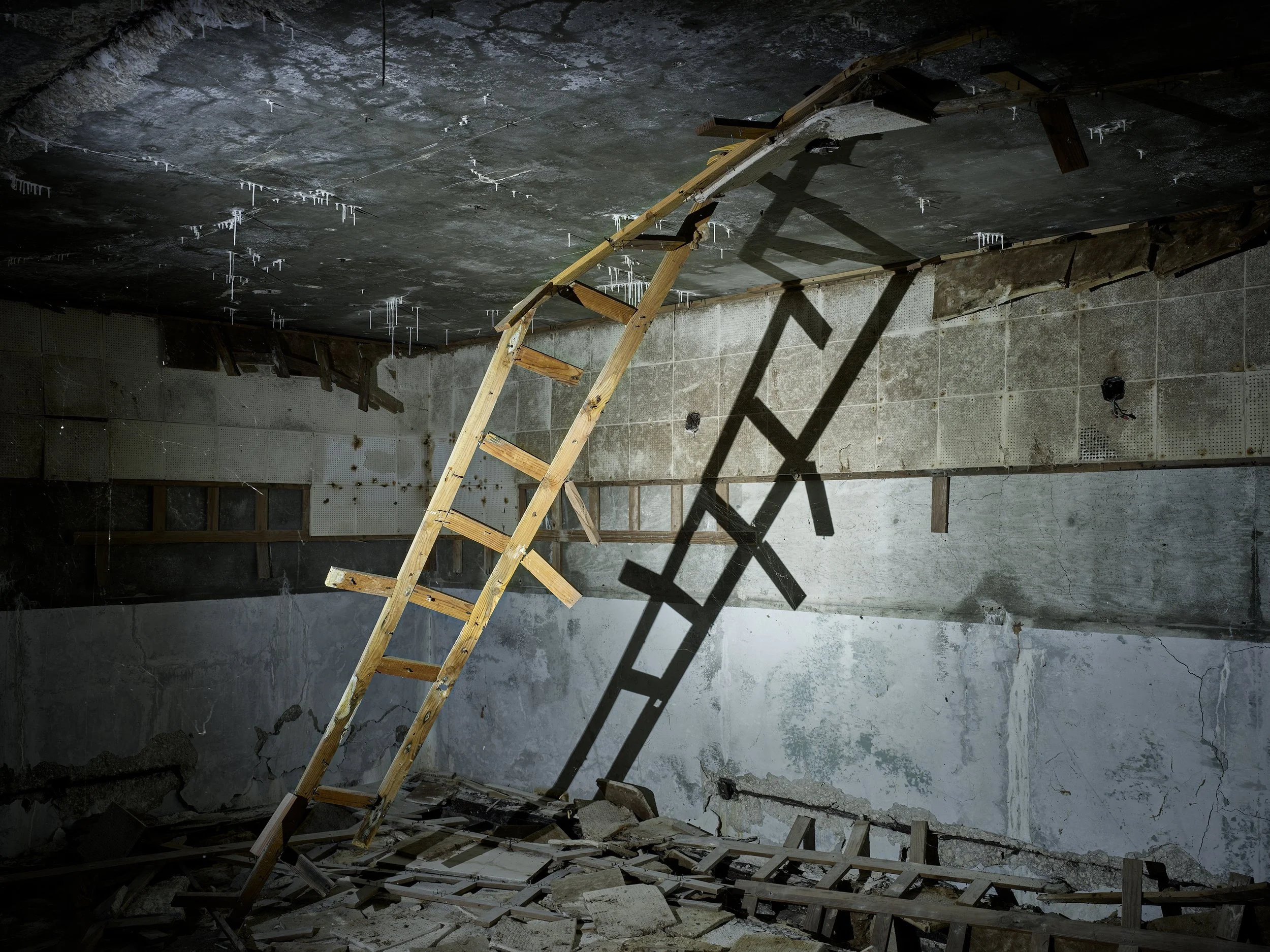
Failing ceiling structure inside a bunker built for monitoring nuclear tests, Bikini island.
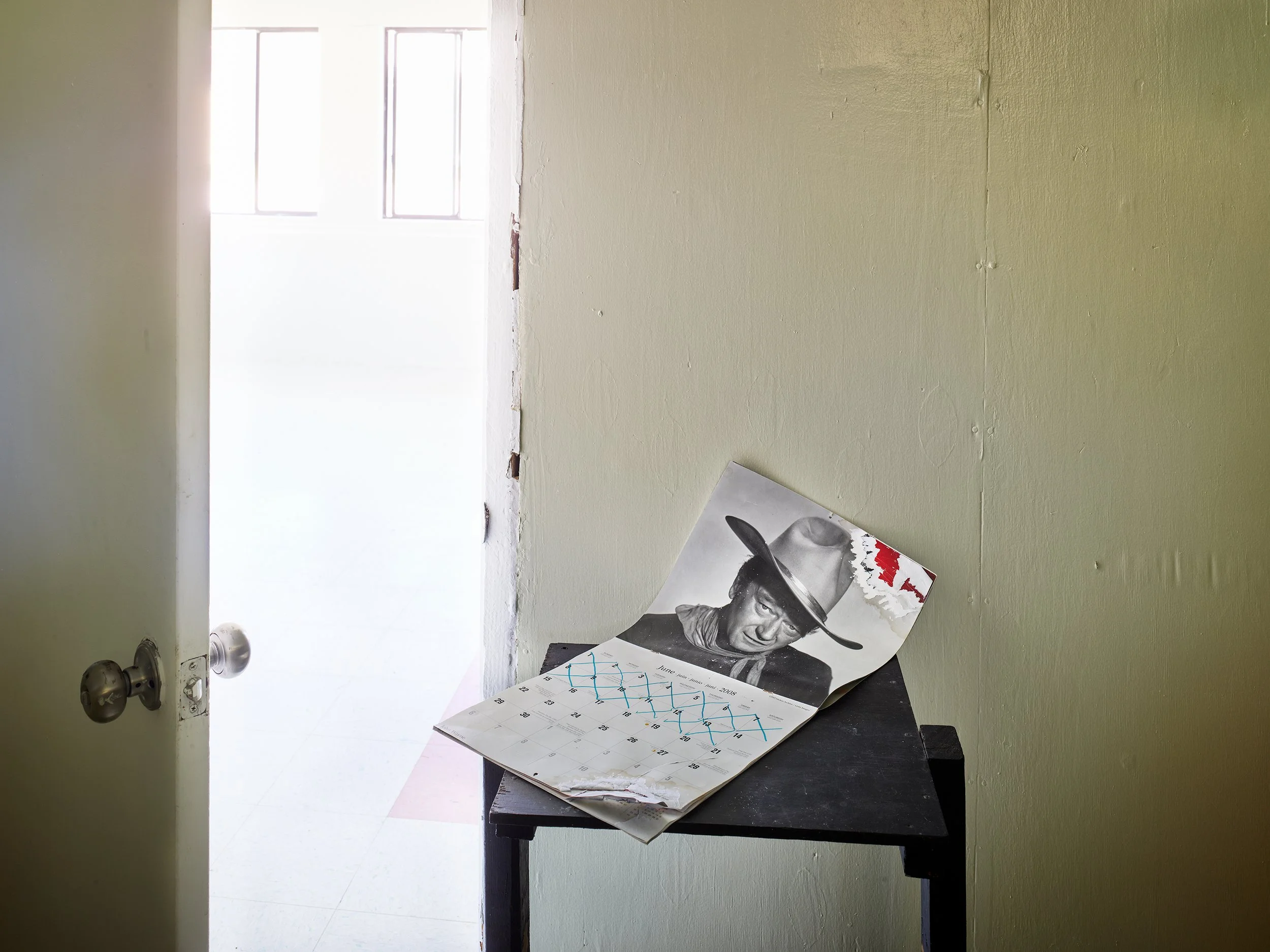
John Wayne calendar found in an abandoned dive shop, Bikini.
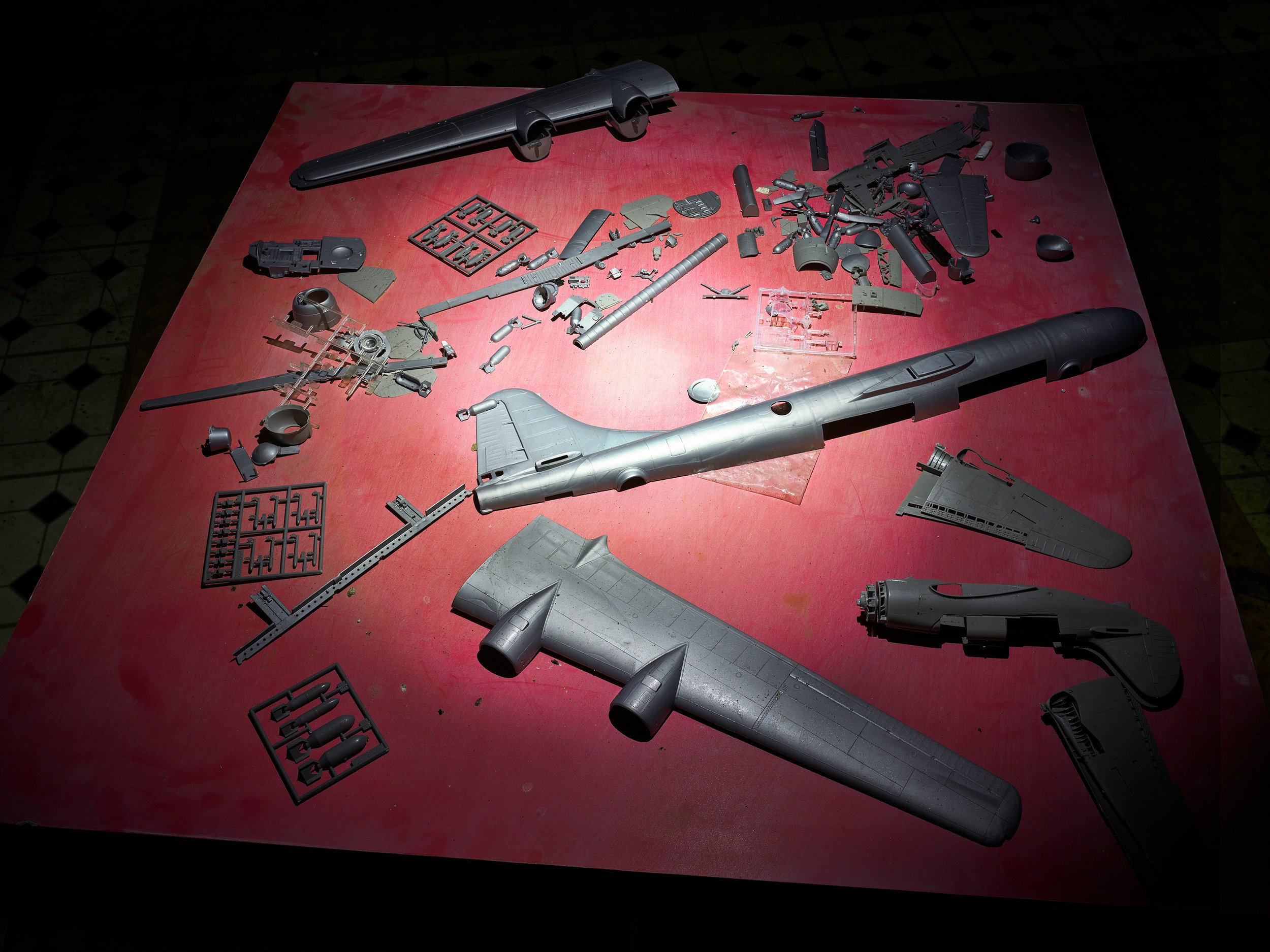
Unassembled plastic model of a B29 bomber left on a table in a former dive operation’s kitchen, Bikini.
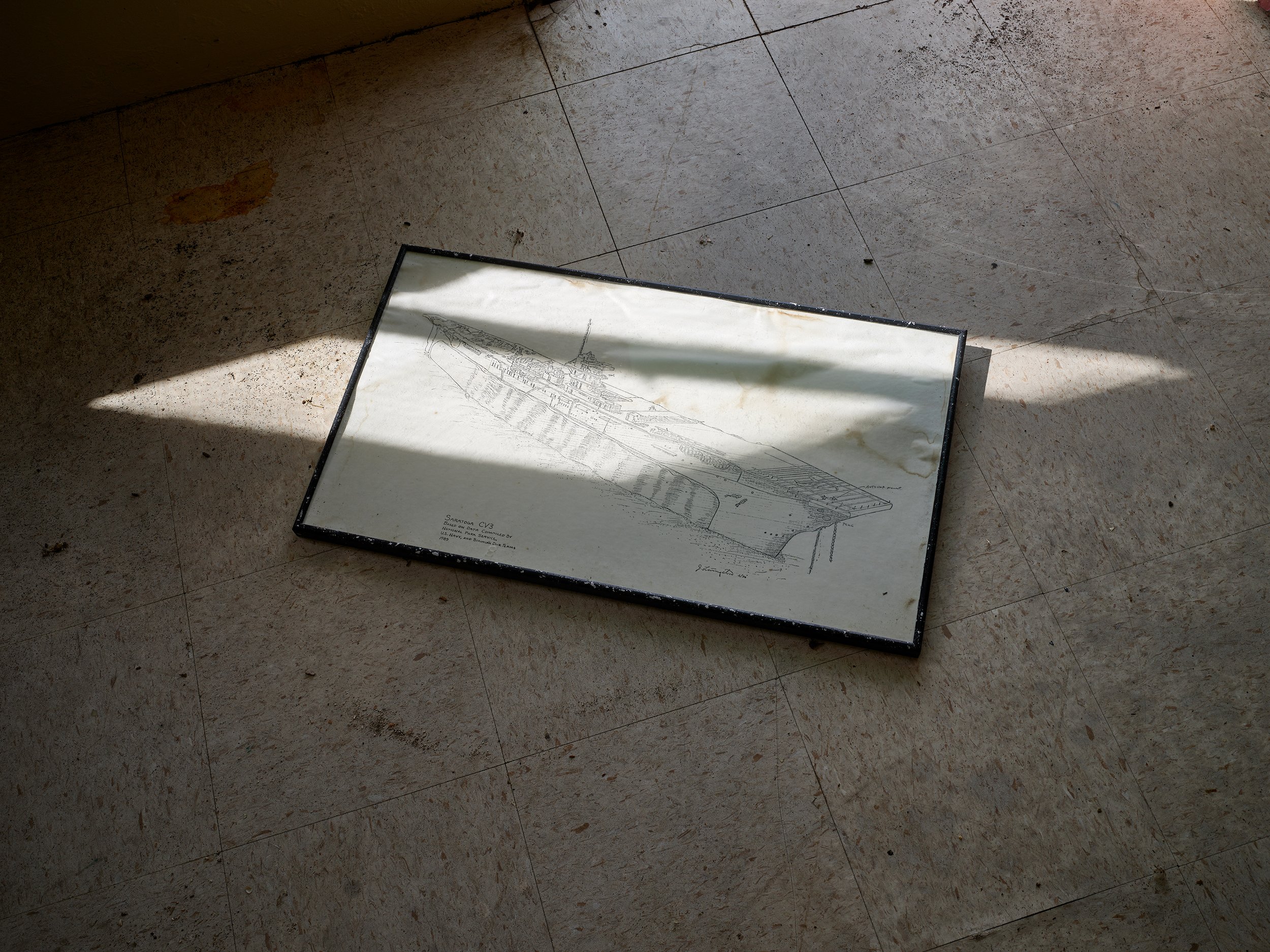
Drawing of the USS Saratoga on the floor of a housing unit on Bikini. The former WWII aircraft carrier, now the focus of experienced divers, rests at the bottom of Bikini lagoon after being sunk by the Baker underwater nuclear detonation in 1946.
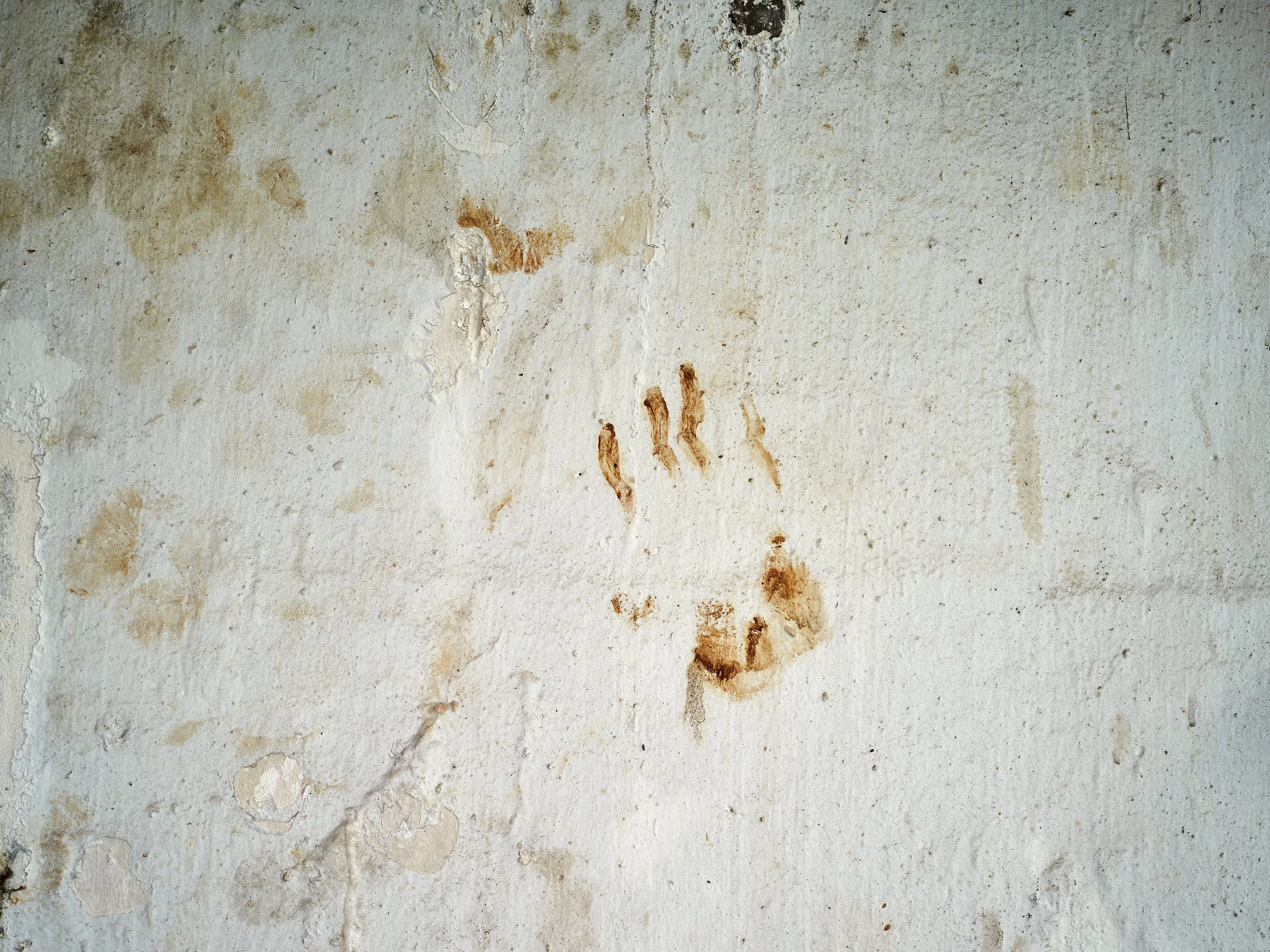
Hand print on the Department of Energy’s shop wall, Bikini.

North end of Bikini island where land ends and the lagoon side of the atoll meets open ocean.
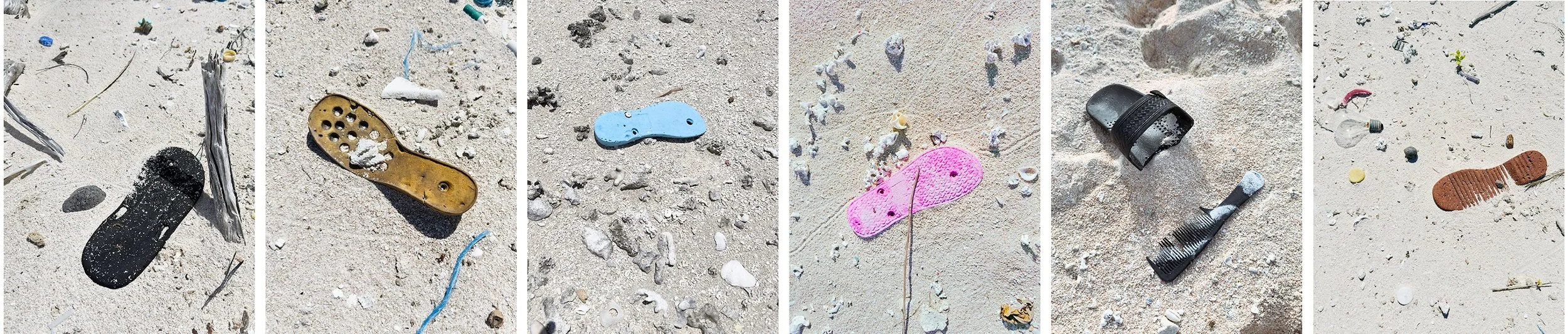
Sandals and shoes found washed up on the beach on the seaward side of Bikini island.
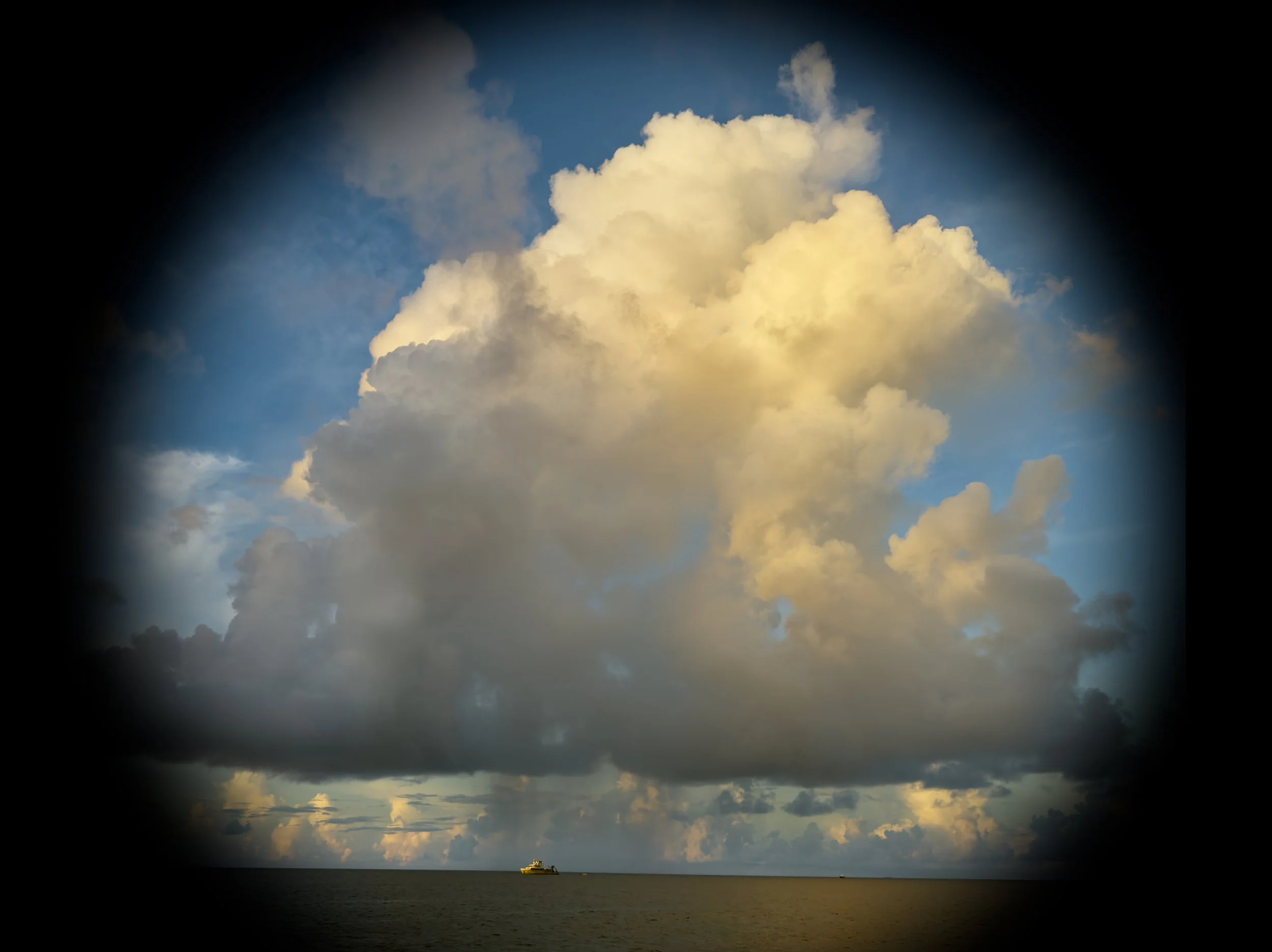
Discovery and morning clouds above Bikini lagoon.
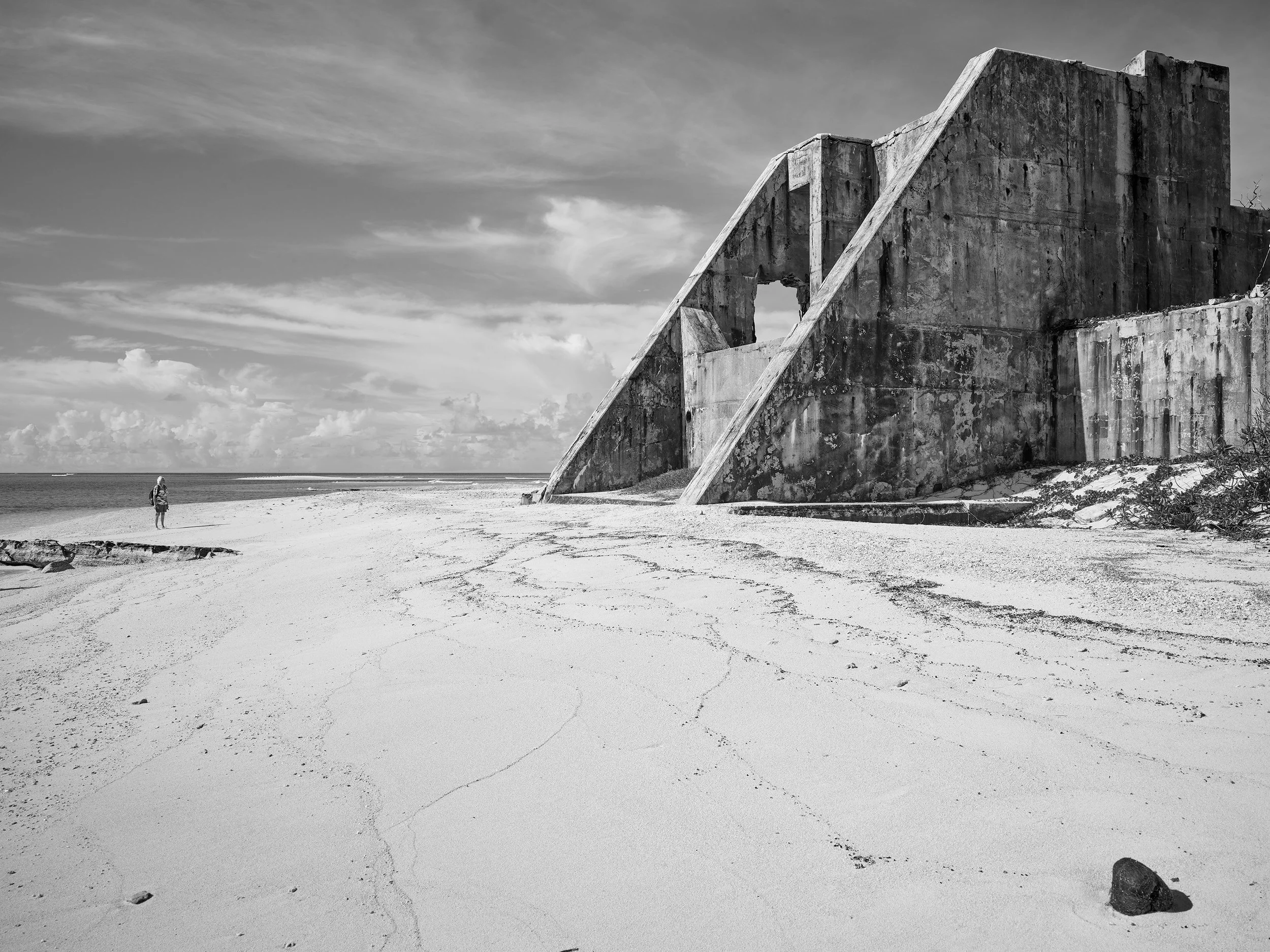
Camera bunker at Aomen, built to record the Bravo test in 1954, the largest nuclear device exploded in US history.
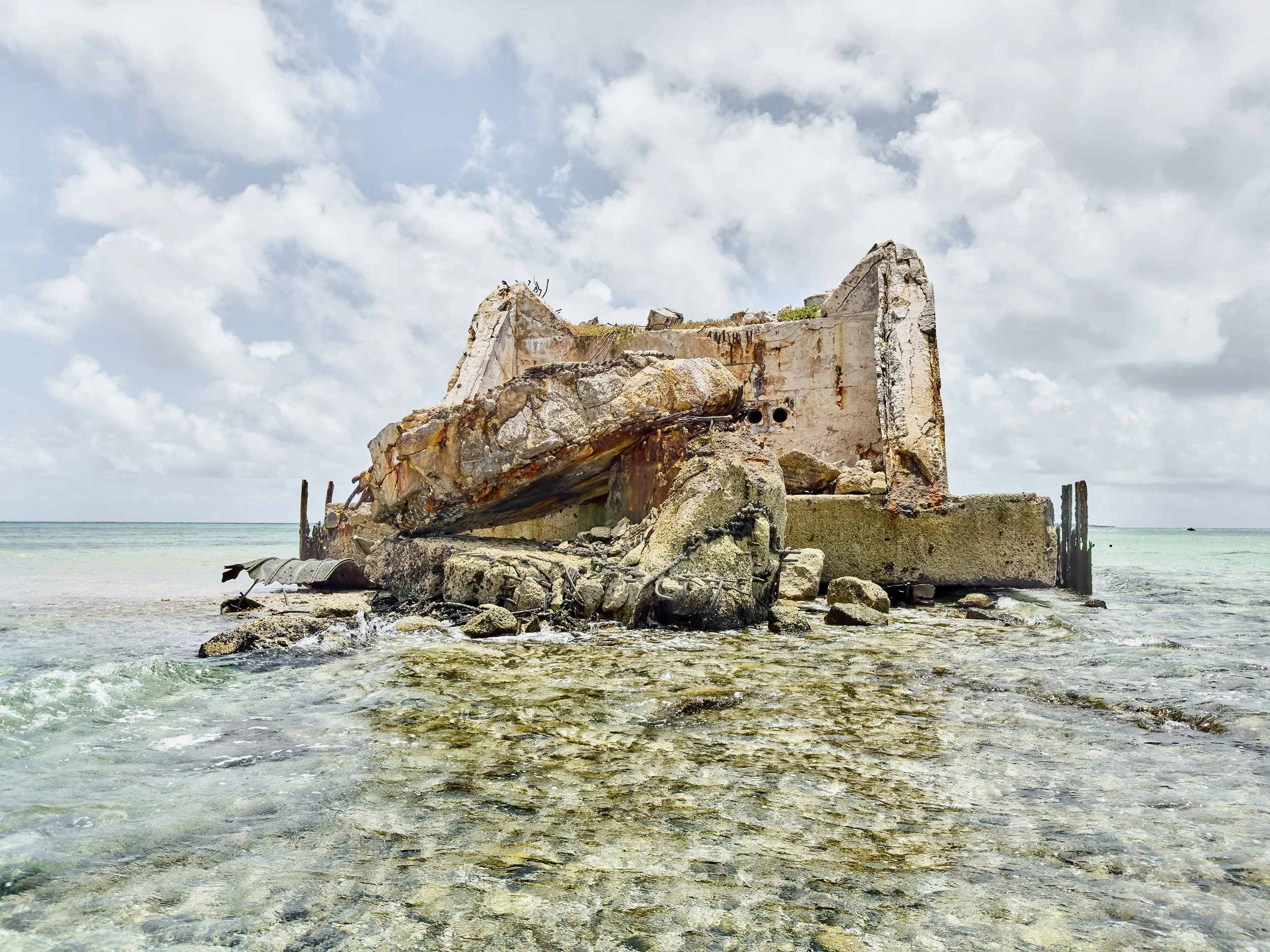
The concrete bunker destroyed by the 15 megaton Bravo explosion.
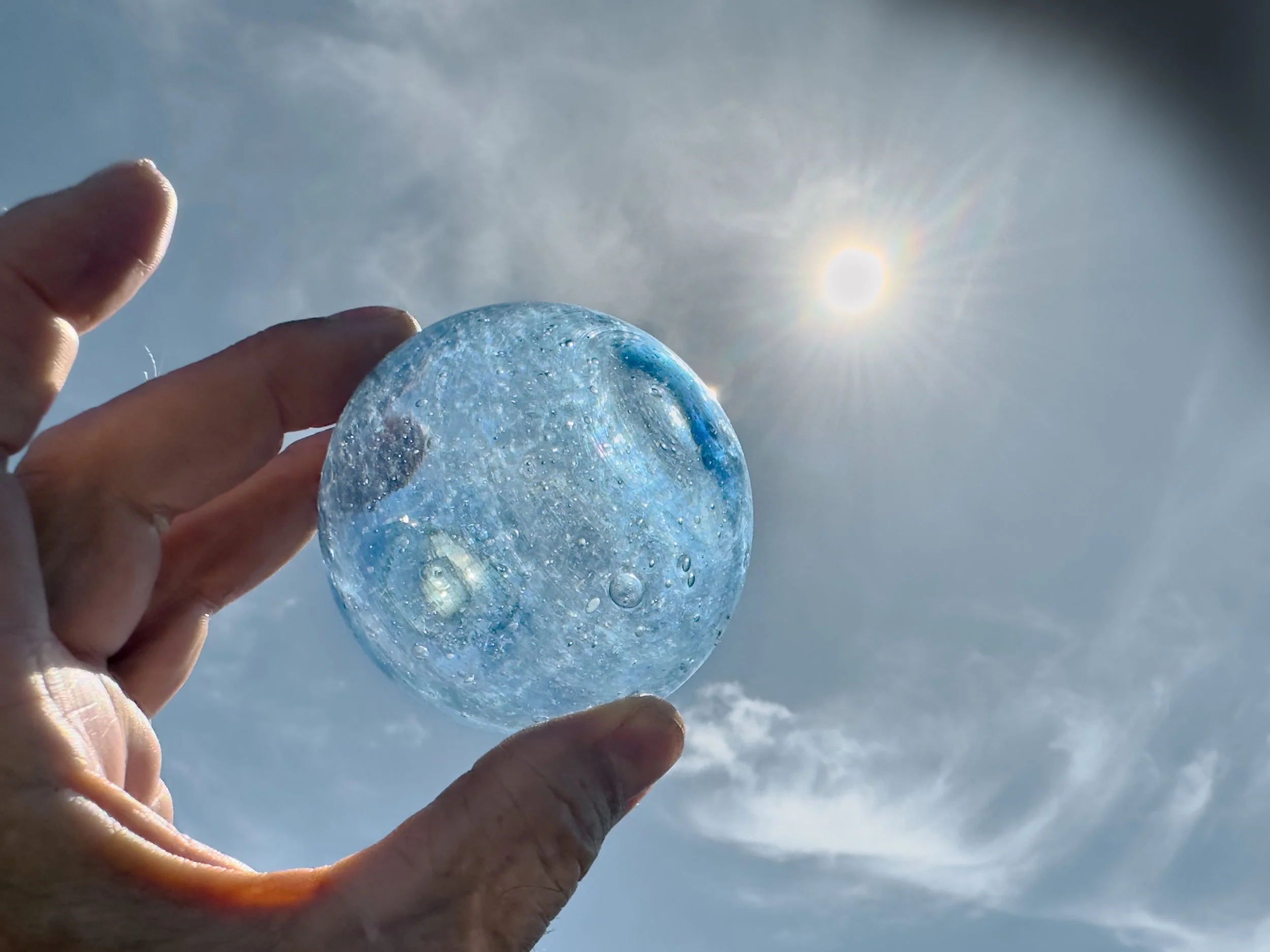
Glass float found on Aomen, site of a bunker used to photograph a thermonuclear explosion.
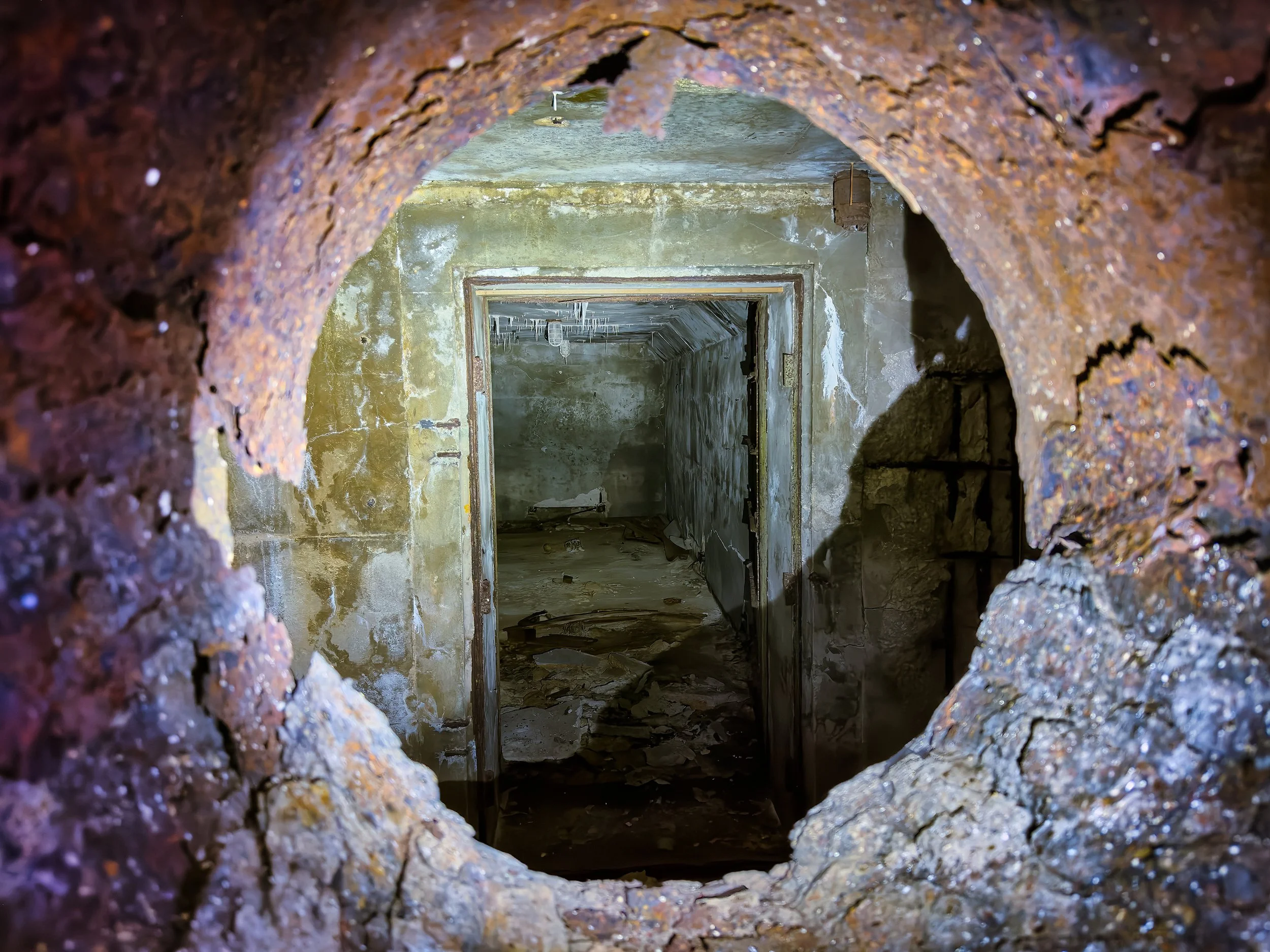
Looking through a porthole into a room in “Bunker 1200,” built to monitor the effects of a thermonuclear device, Nam island.
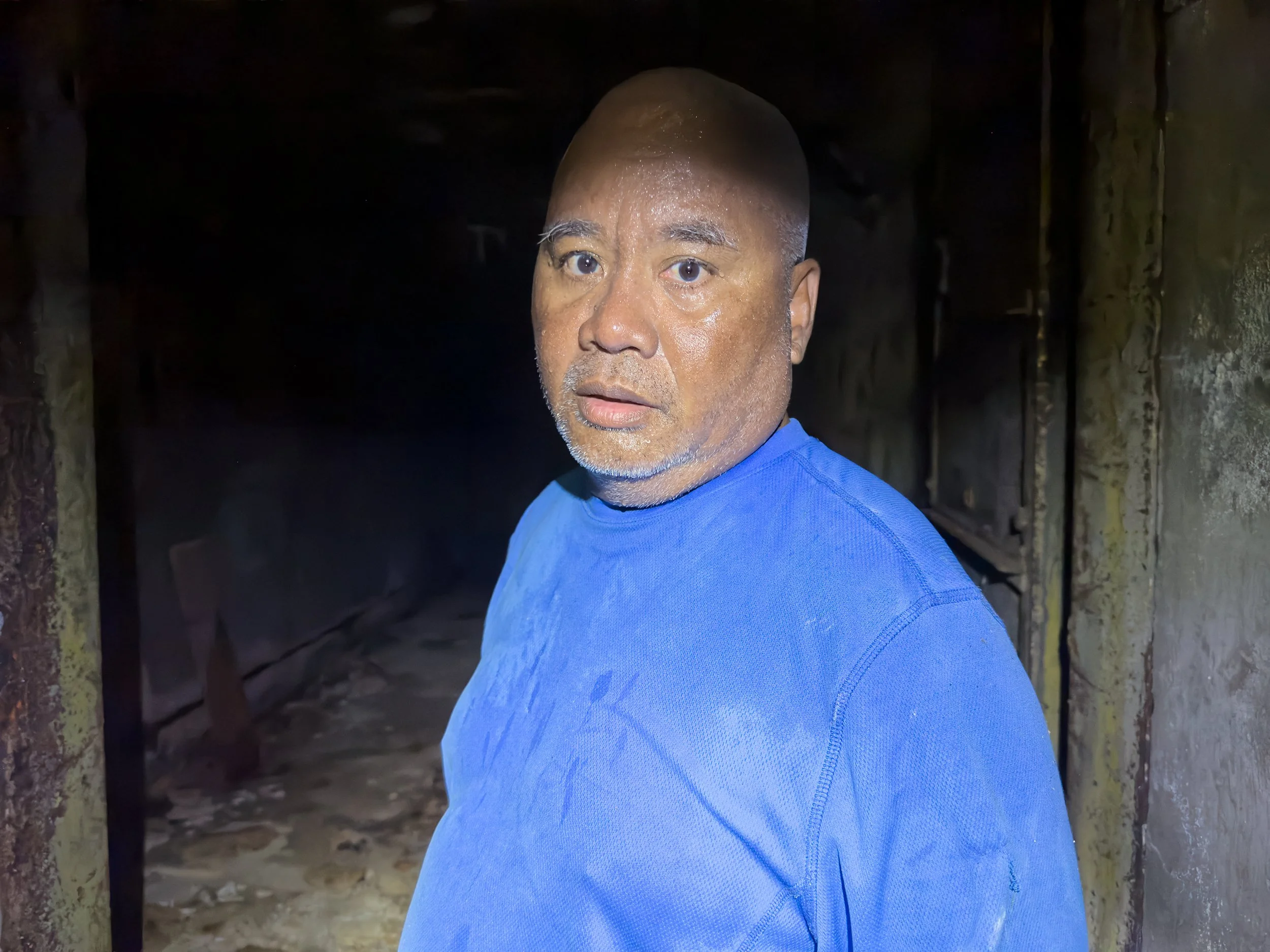
Alson Kelen, former resident of Bikini, walking away from a once two story concrete structure built close to the Bravo detonation’s ground zero.
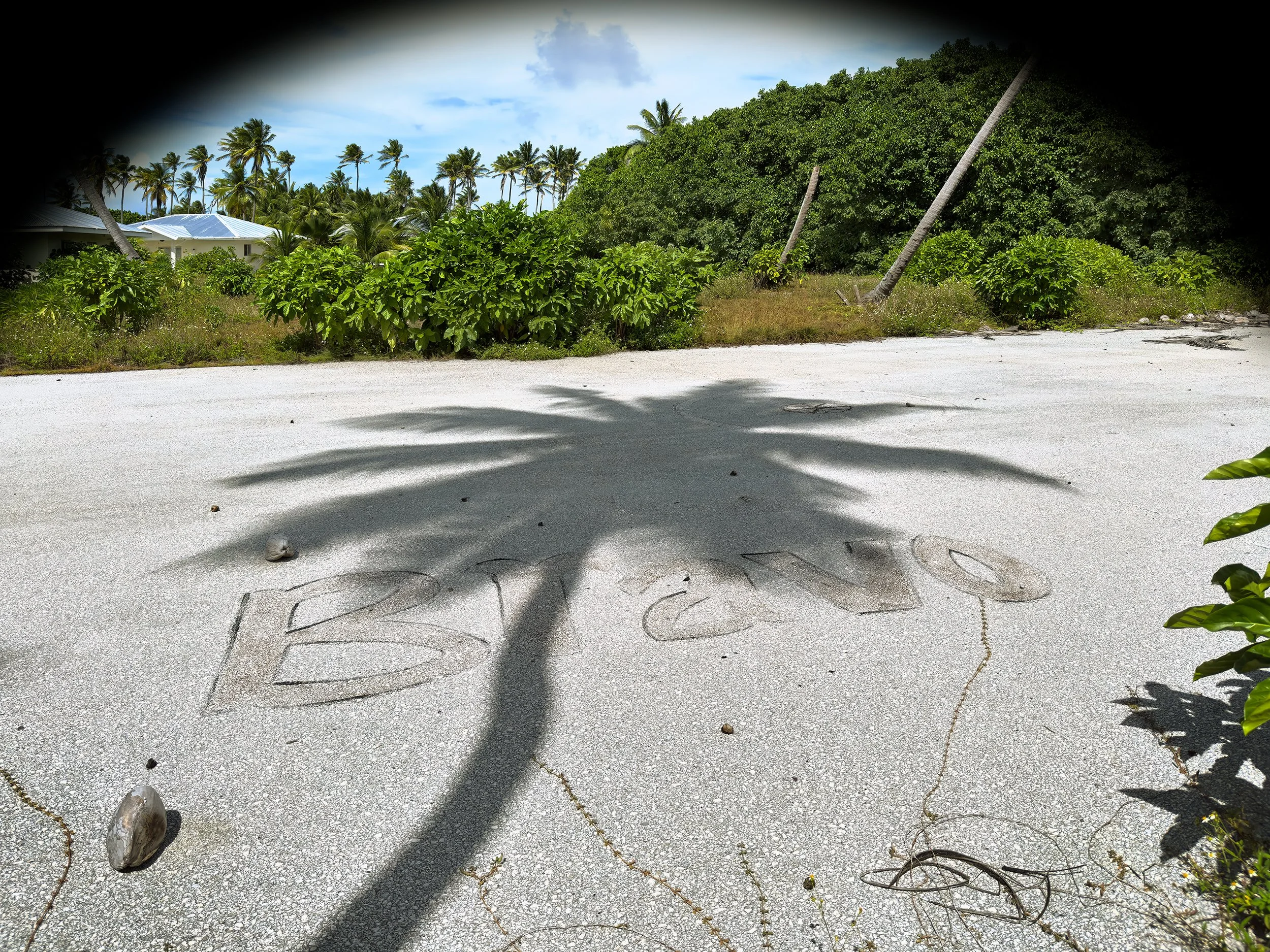
The basketball court at Rongelap. The vaporized reef from the Bravo detonation on Bikini atoll in 1954 rose into the stratosphere, drifted 120 miles east and fell onto the island of Rongelap, sickening residents and making the island uninhabitable.
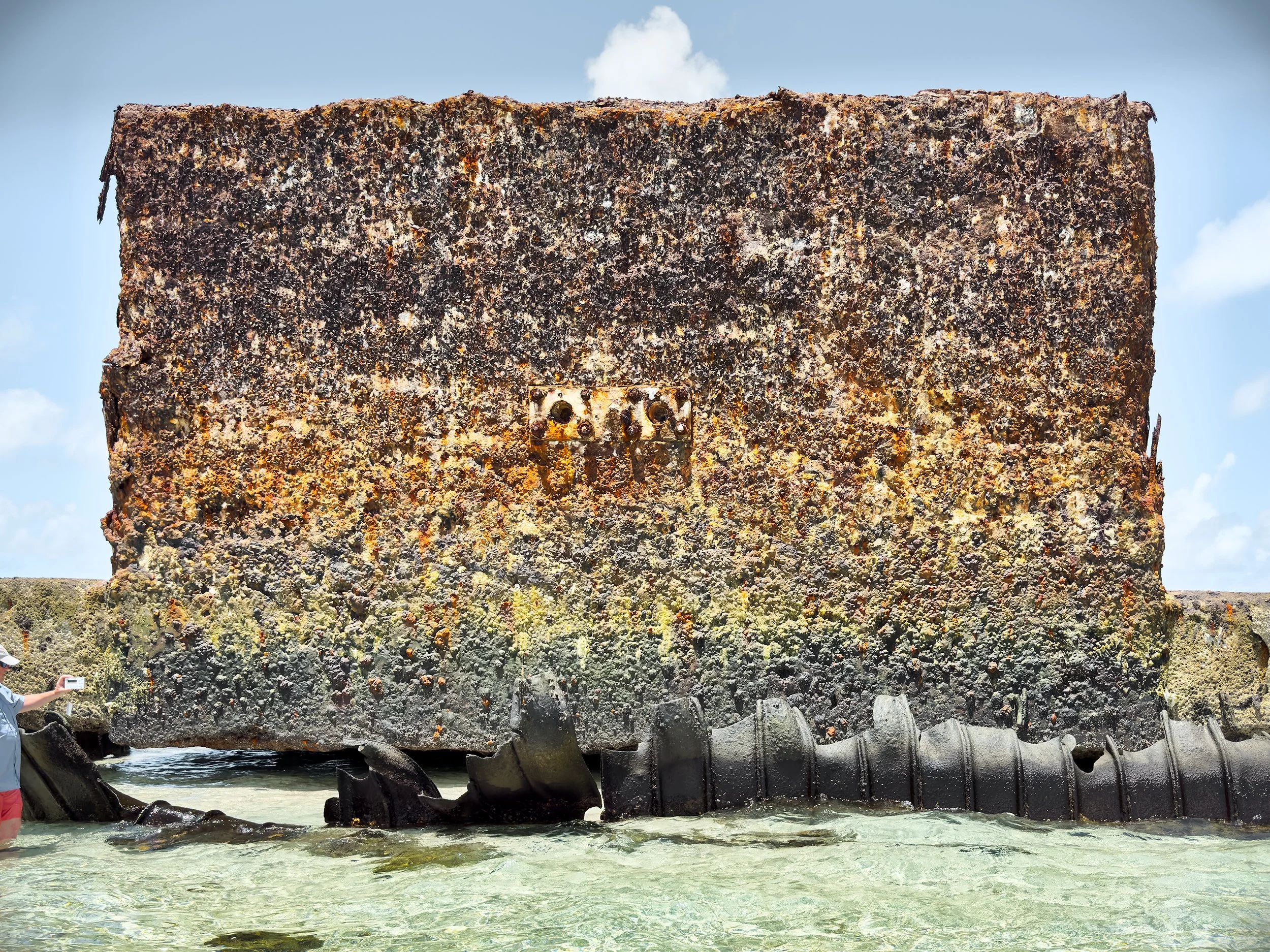
Bill measuring radiation on a wall of blistered and fused concrete that faced the Bravo device as it exploded. The portholes in the middle were intended for cameras but were destroyed by the intensity of the blast that also vaporized an adjacent island.
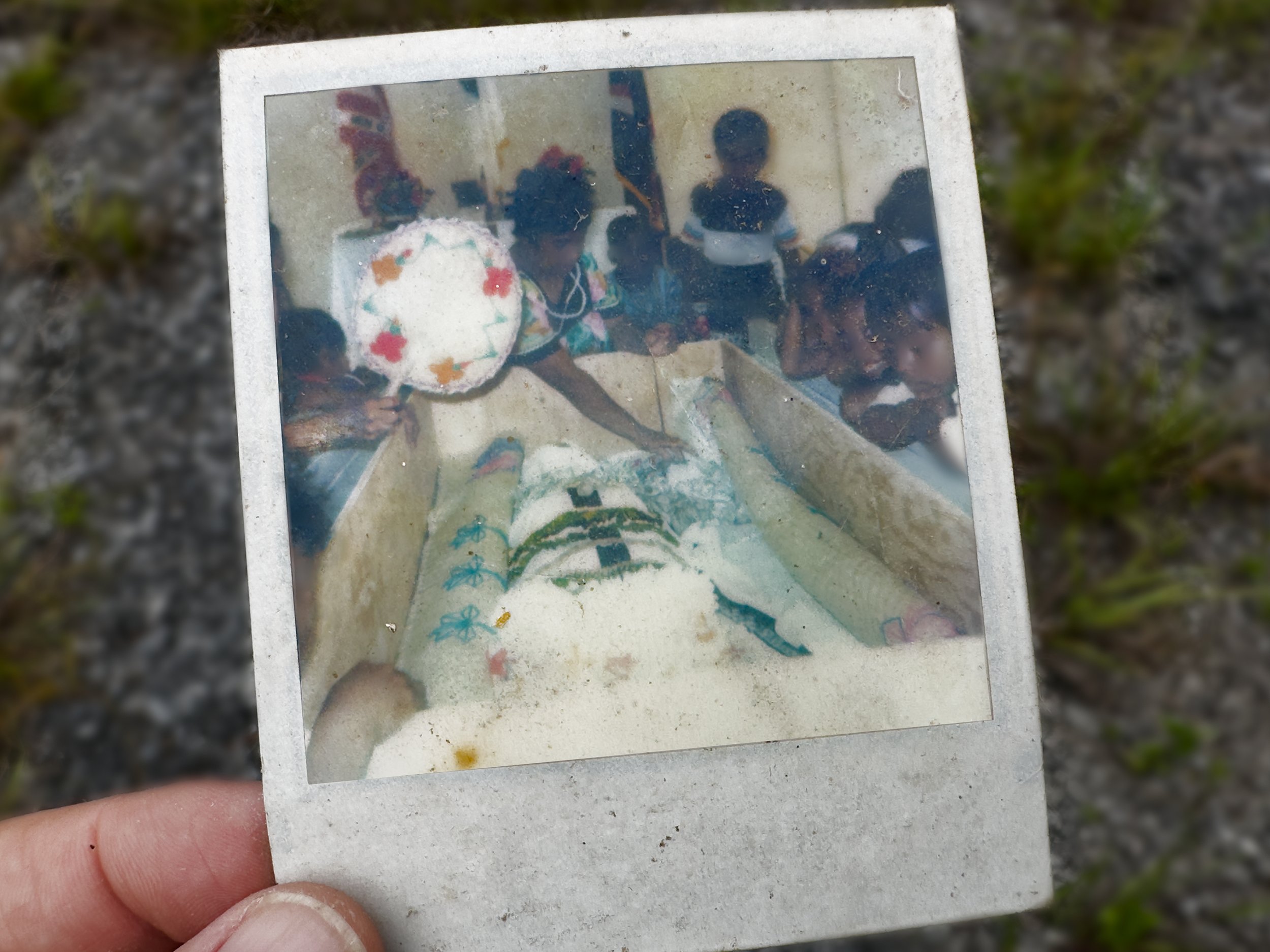
Snapshot of a funeral found in an abandoned house.
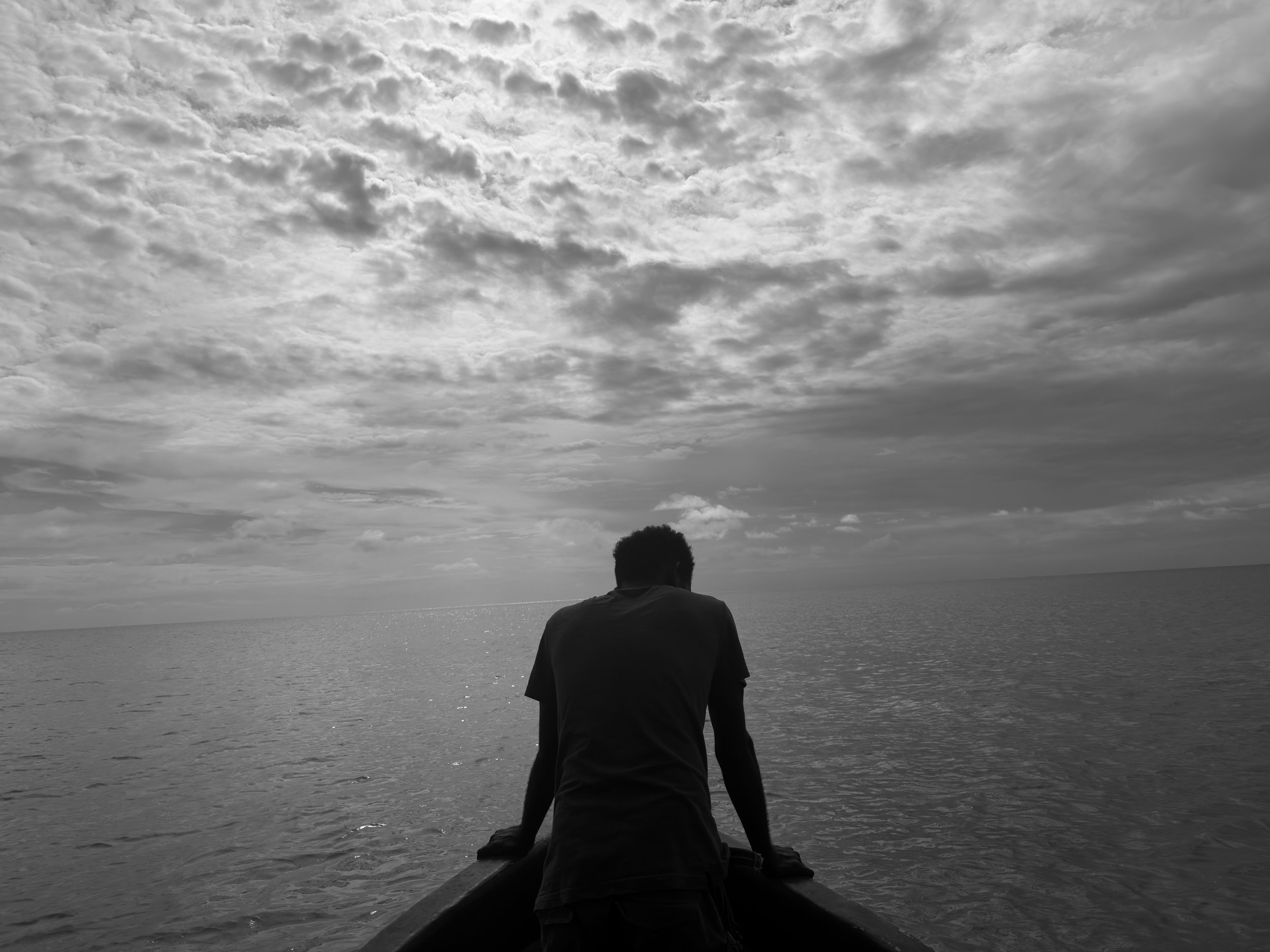
Leaving Bikini island for the last time.
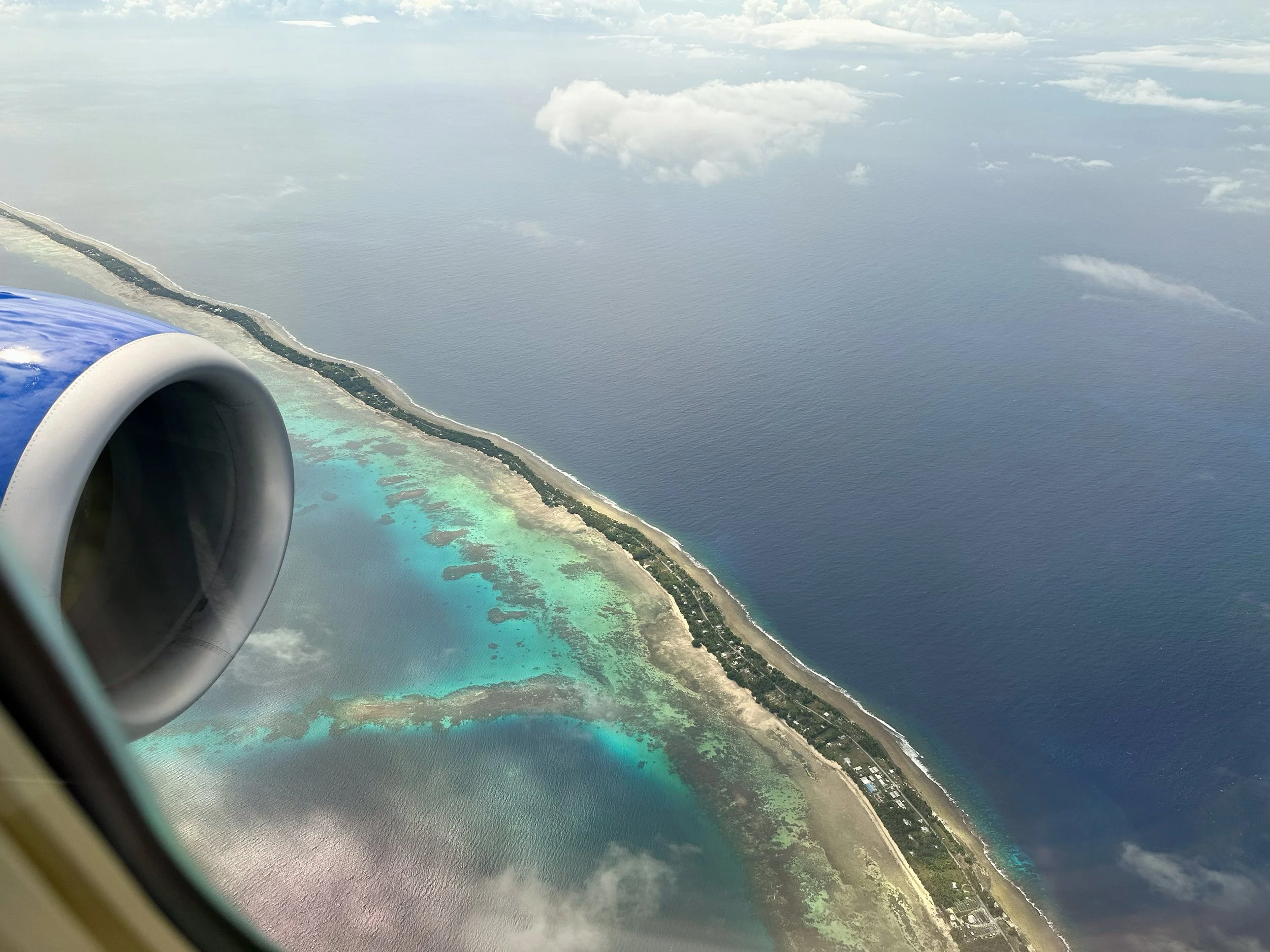
United flight #132 approaching Majuro.
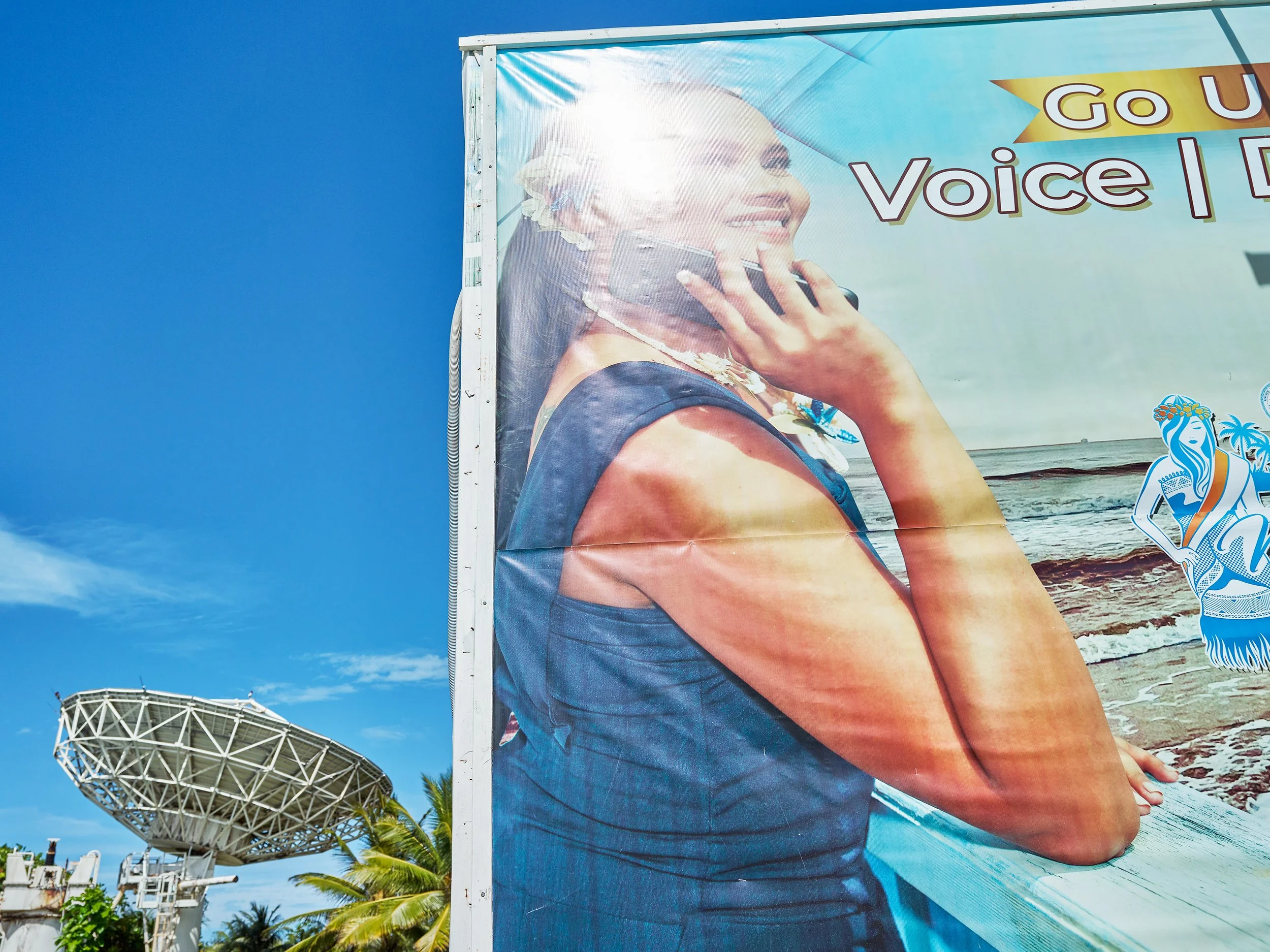
Satellite dish and billboard advertising cell phone coverage, near the capitol on Majuro.
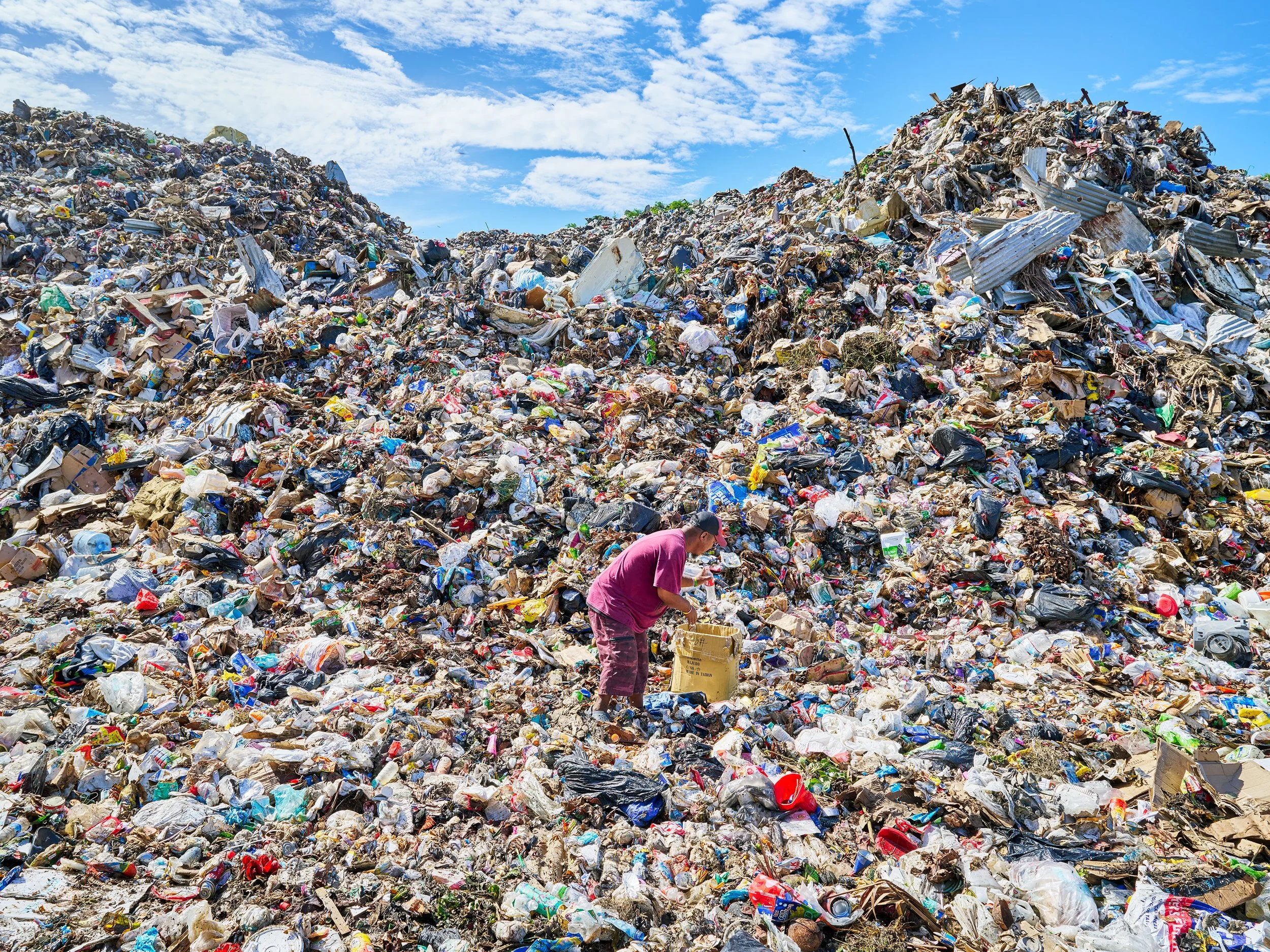
Man sorting plastic water bottles in the dump at Majuro. The pile is the tallest point in the Marshall Islands.
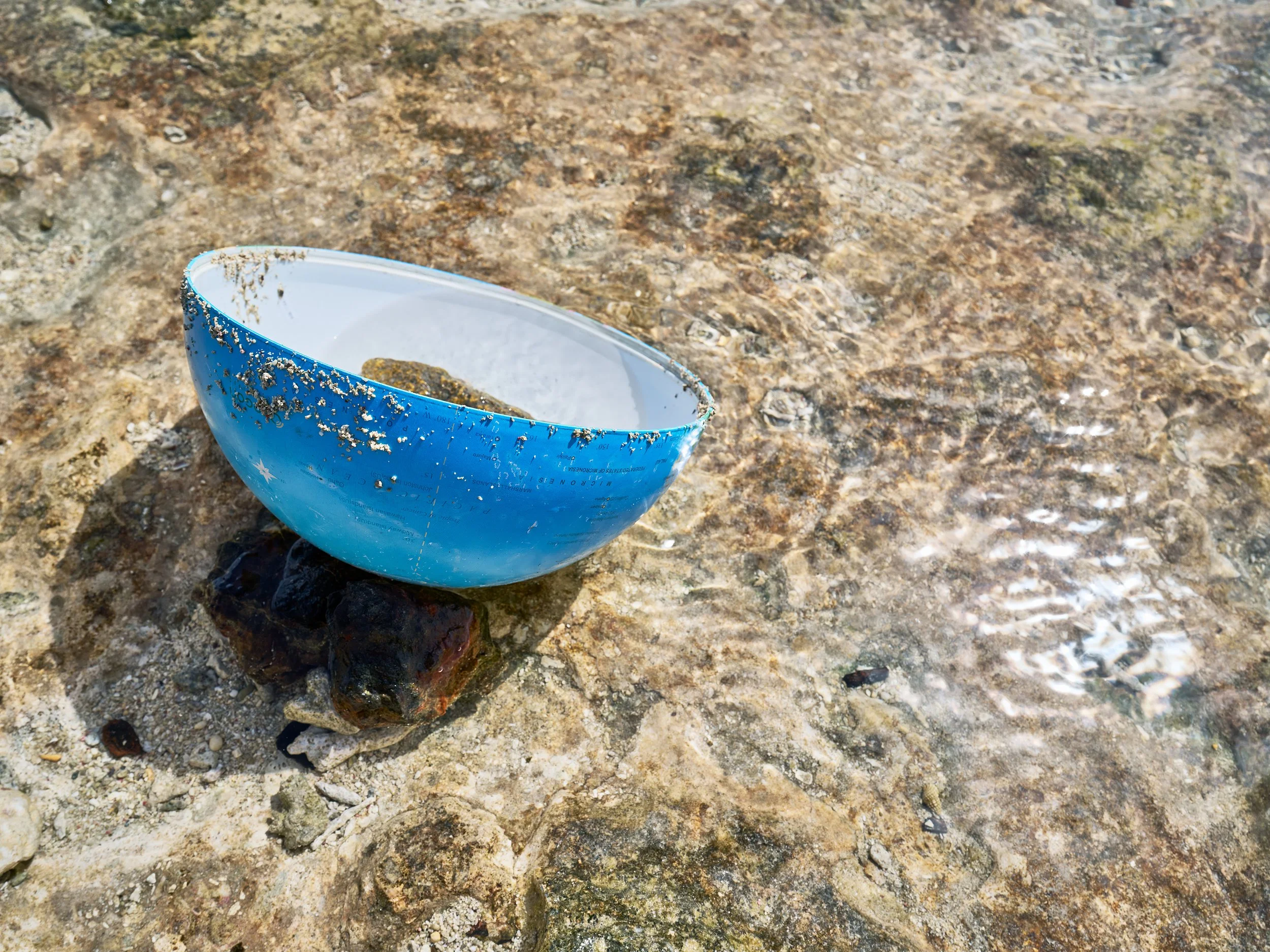
The northern hemisphere of a globe found in the tidal zone on Majuro, with the Marshall Islands appearing just above the water line.
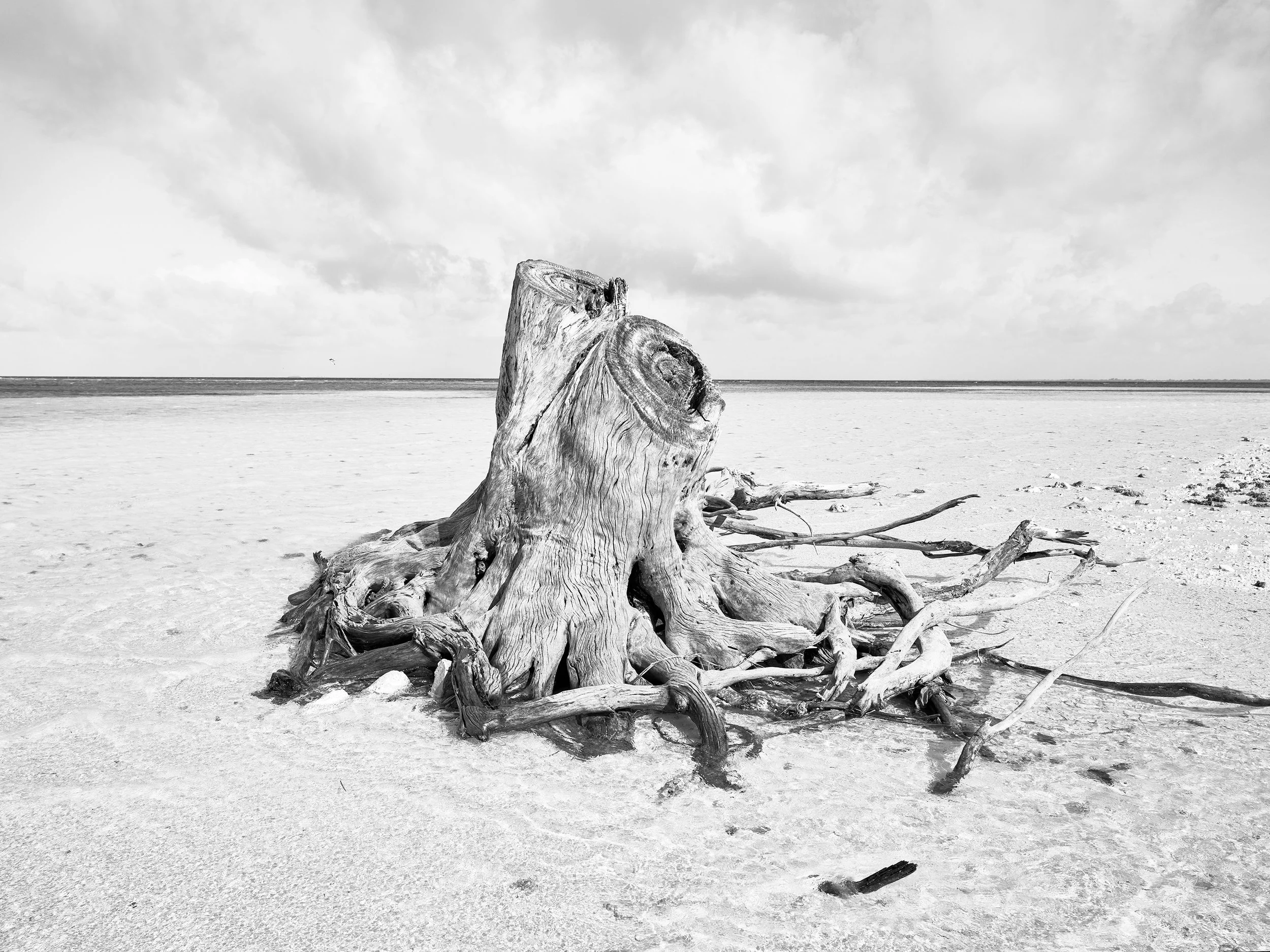
Tree stump washed from shore by rising tides, Laura Beach.
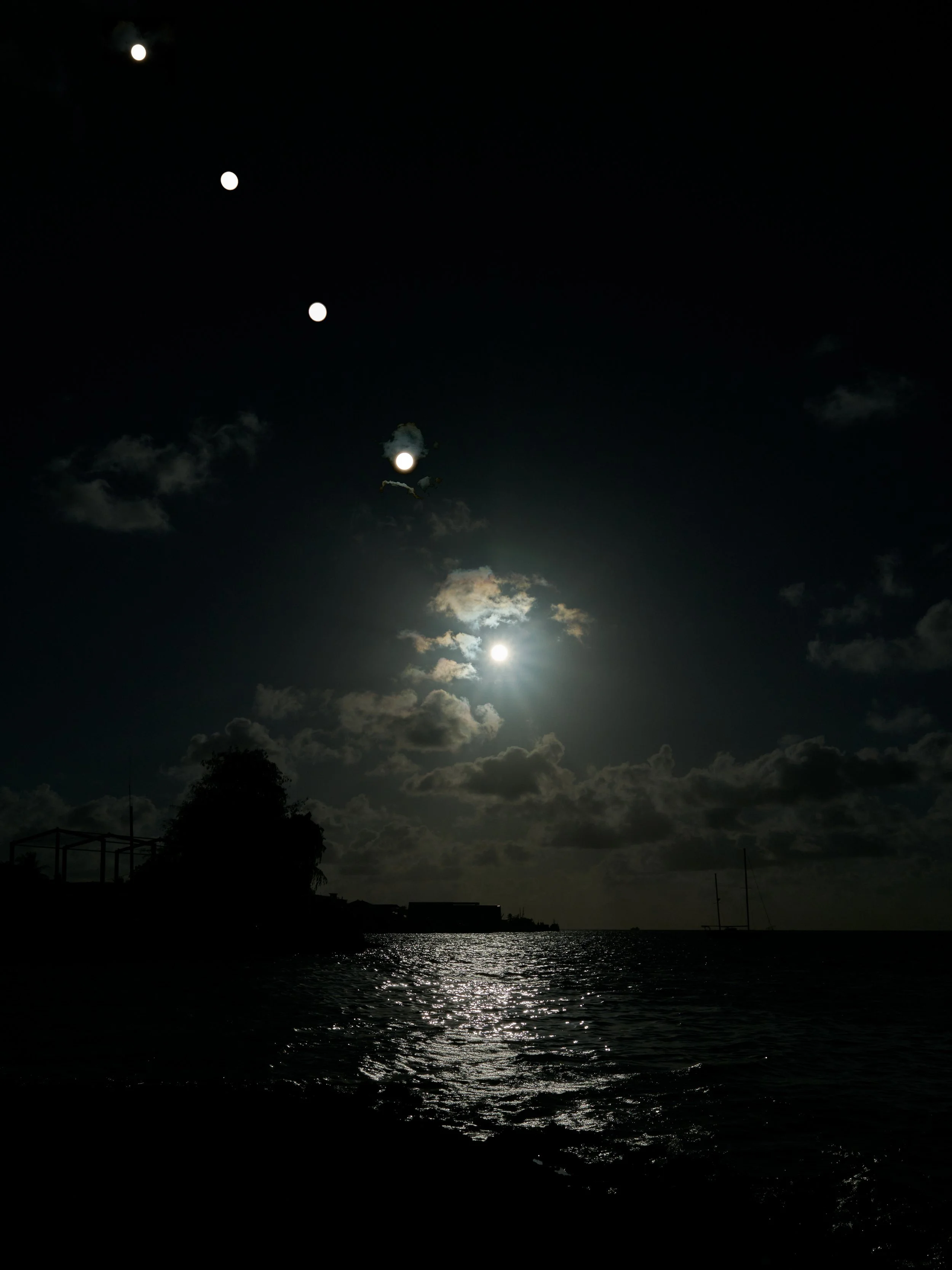
Sun setting over the lagoon at Majuro.
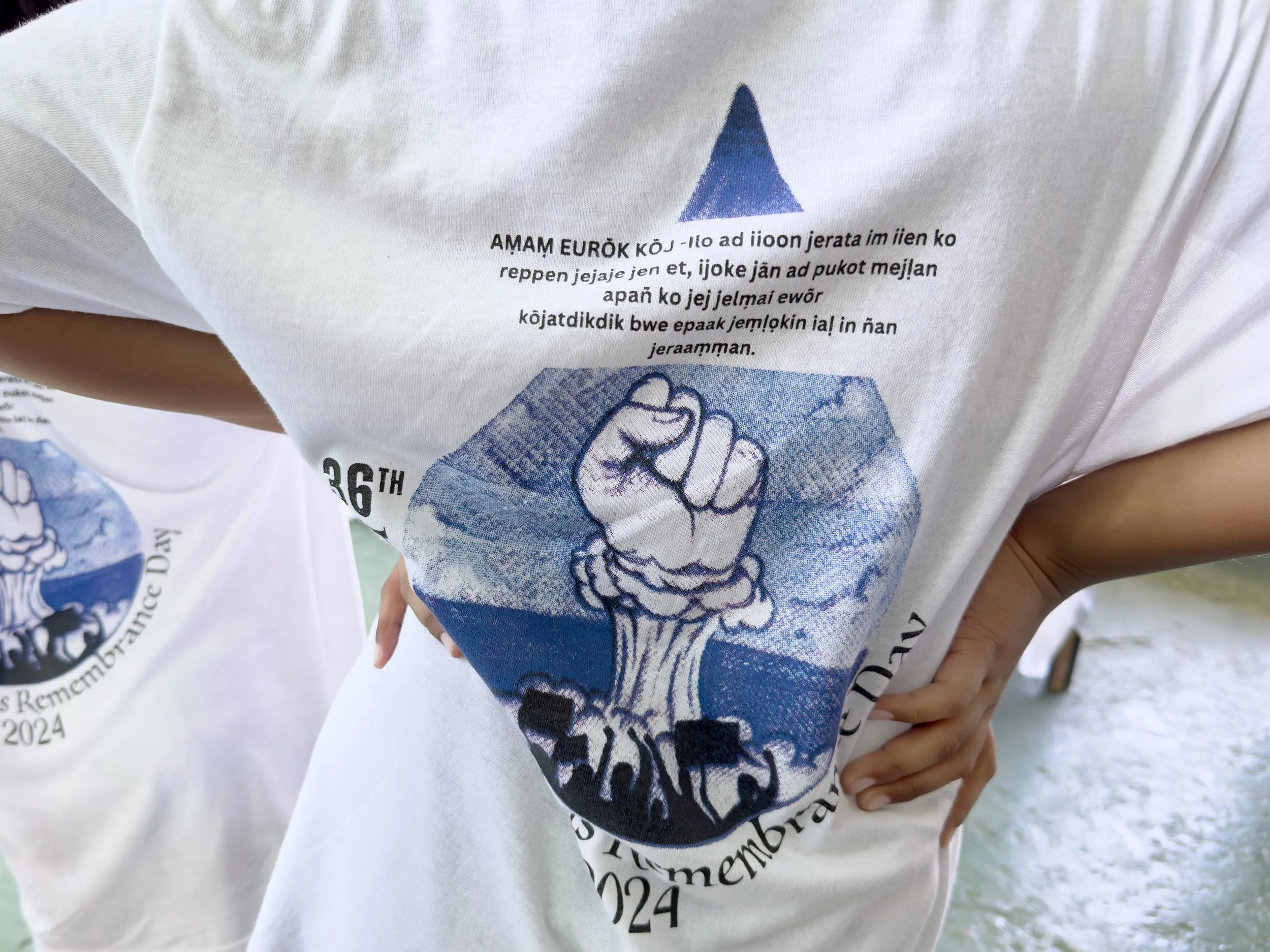
Young woman wearing a nuclear fist T-shirt commemorating Nuclear Victims Remembrance Day, March 1, 2024.
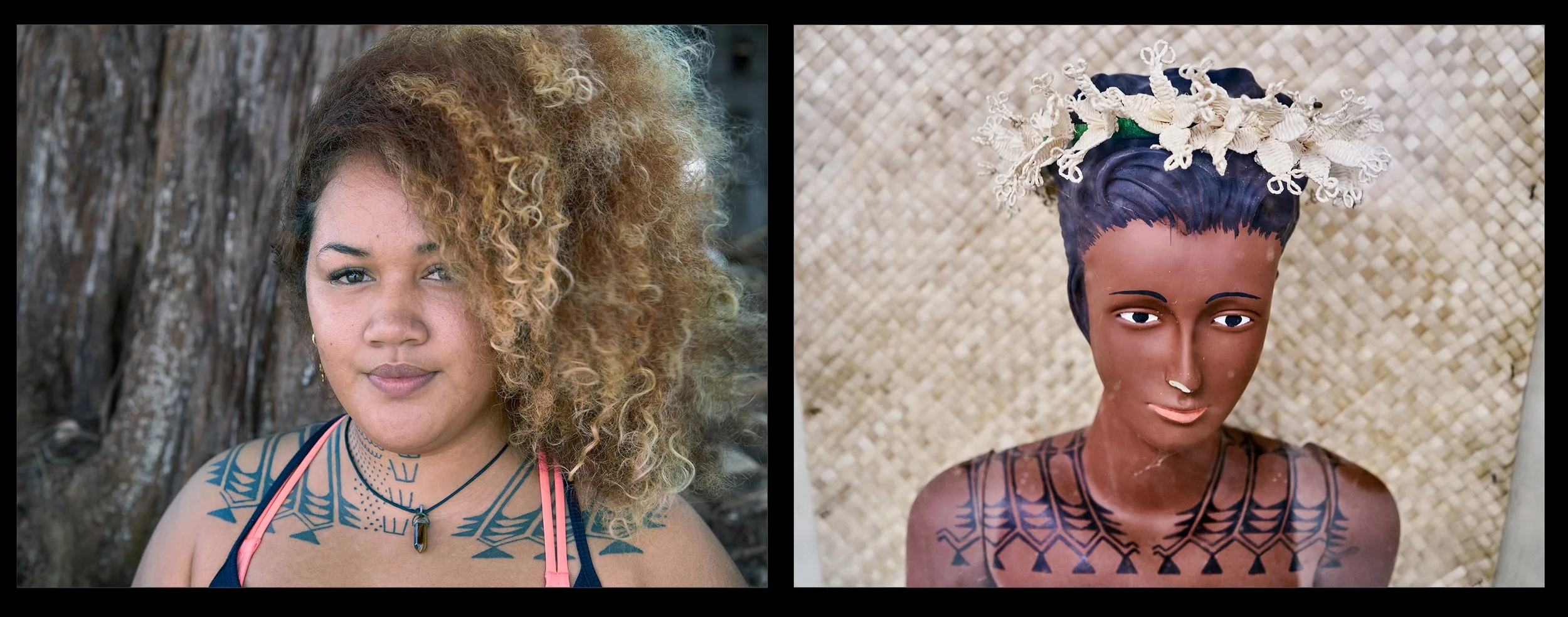
Left: Peji Glad, Jo Jikum tattoo artist with tattoos modeled after a mannequin on display in the National Museum and Archives in Majuro. Right: Mannequin with traditional tattoos, National Museum and Archives, Majuro.
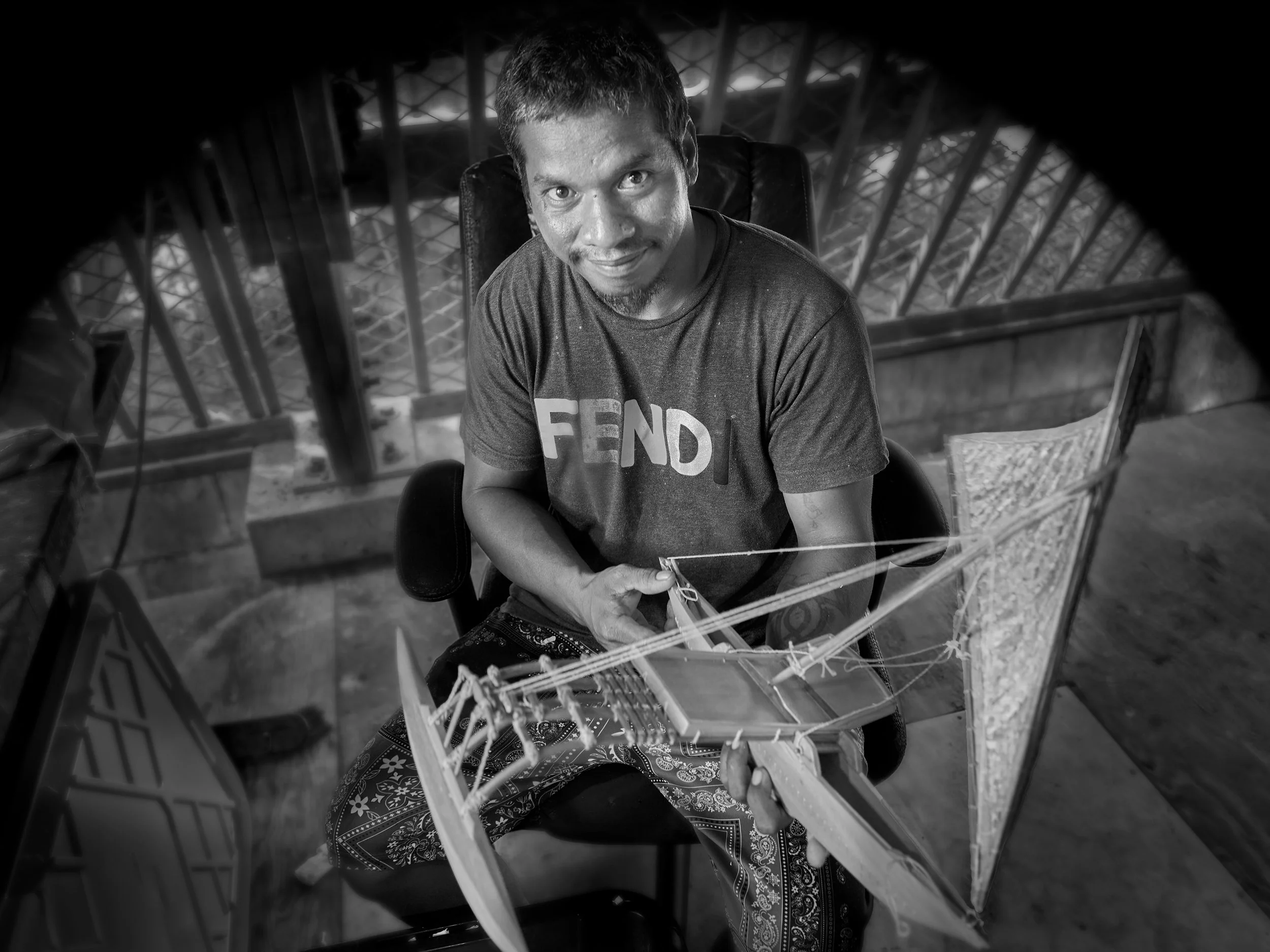
Canoe builder Clancy Taika at Waan Aelõñ in Ma (WAM) showing a model of a traditional Marshallese canoe.
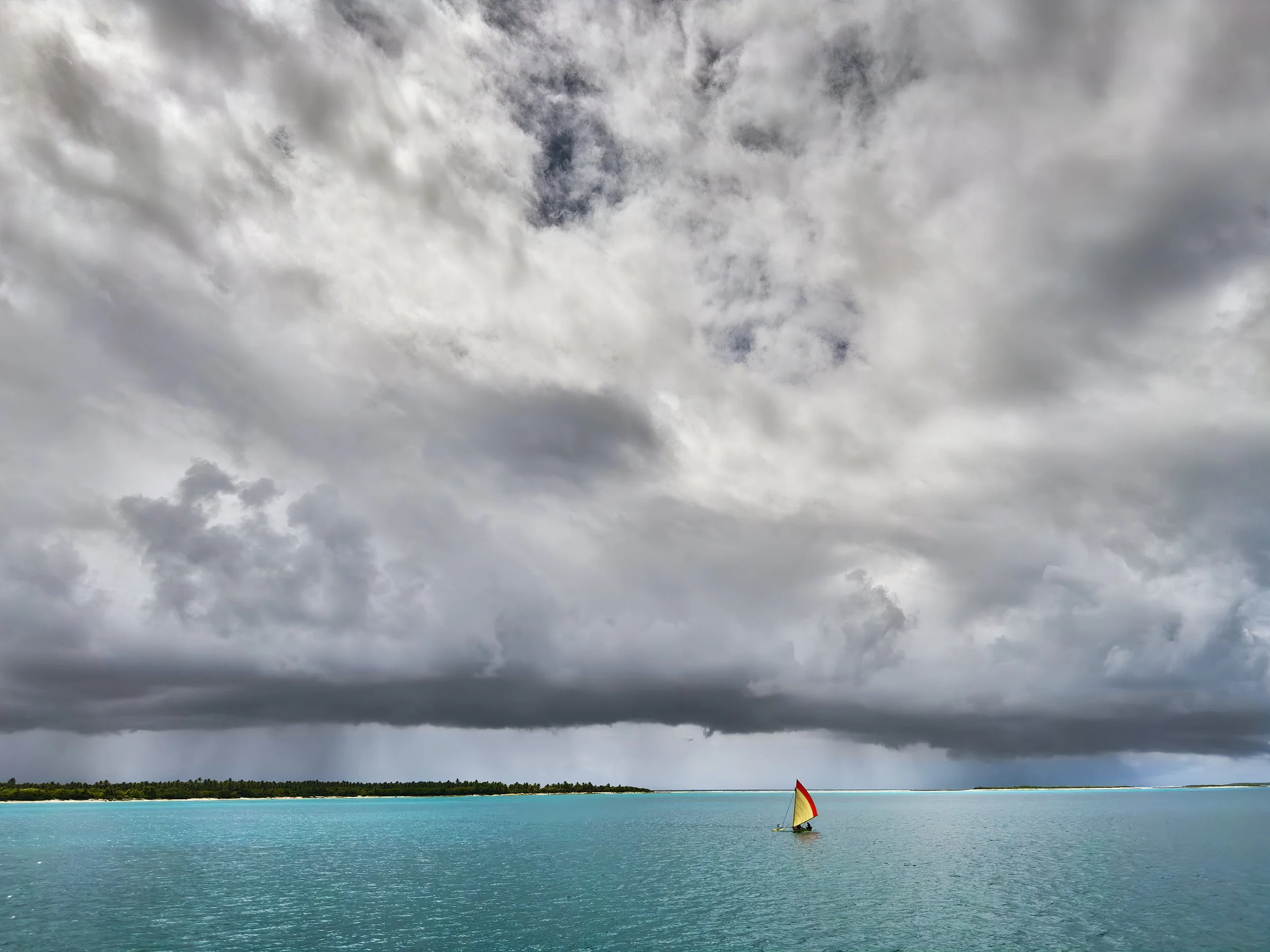
The canoe built by Alson Kelen and builders at WAM, sailing in Bikini lagoon. The canoe was transported to Bikini and intentionally left on the island’s beach.
Related Projects:
Related Books:

The Half Life of History, with William L. Fox
Radius Books, 20011
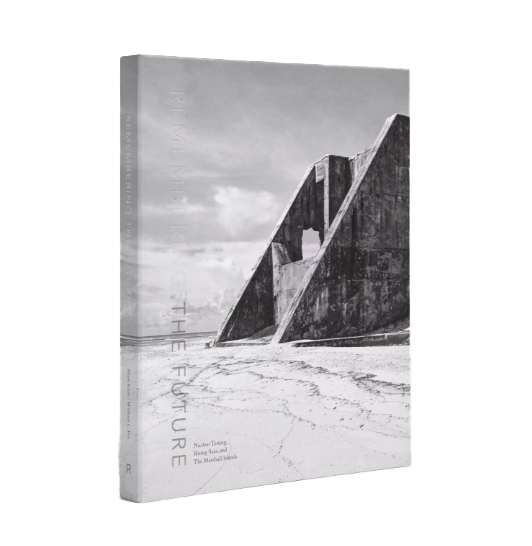
Mark Klett and William L. Fox: Remembering the Future
Radius Books, 2026